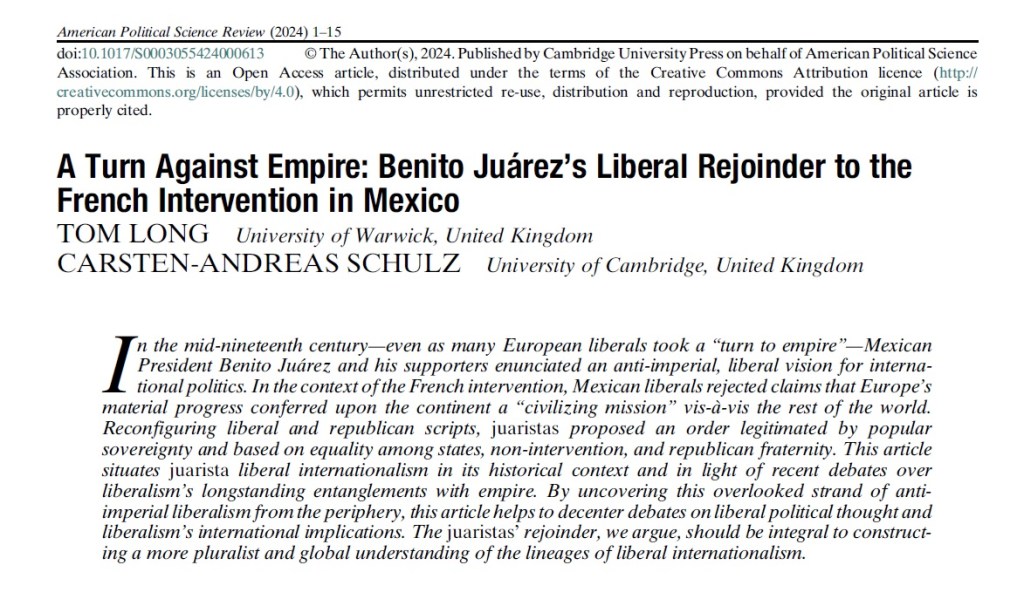
APSR article: Benito Juárez’s liberal internationalism

Carsten-Andreas Schulz and my article on the liberal internationalism of Mexico’s Benito Juárez is out in the American Political Science Review, the leading journal in the field. In our article, we describe how domestic political strife and international interventions in the 1860s shaped the juaristas’ republican vision of international order—one based on the rule of law, equality, and republican fraternity. Too often, both supporters and critiques see liberal internationalism as an essentially Anglo-American project, one associated with Woodrow Wilson and the aftermath of the two world wars. By digging into Mexican political thought decades earlier, we tell a new and more global intellectual history of liberal internationalisms, in the plural.

In the 1860s, Latin Americans faced a flurry of imperial incursions. These episodes coincided with European liberals embrace of imperialism to uplift supposedly “backwards” peoples—a phenomenon Jennifer Pitts termed the “turn to empire.” The French intervention in Mexico stands as one of the most pernicious examples, though certainly not the only one.

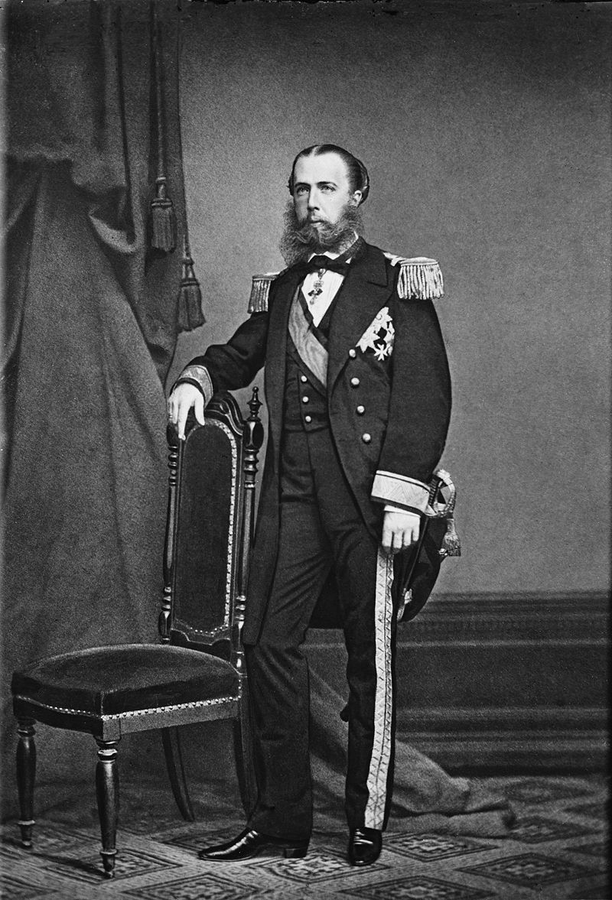
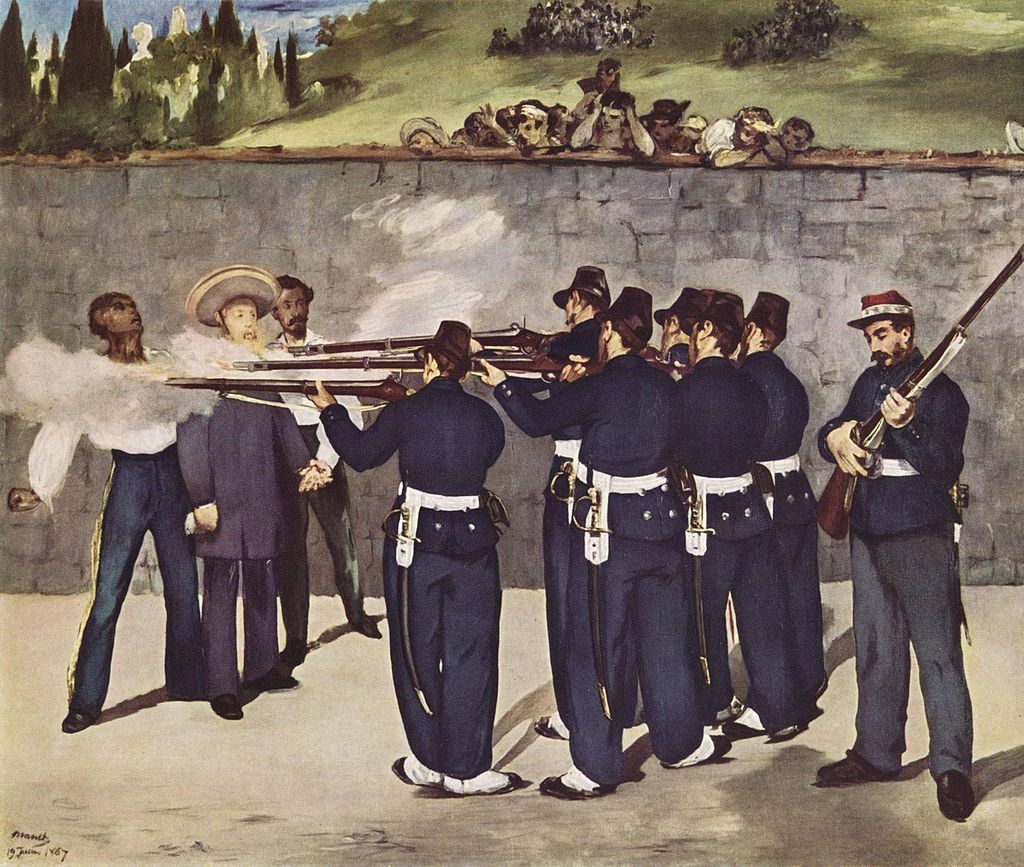
In Mexico, reforms had sparked a civil war between conservatives and liberals, led by Benito Juárez (below, right), a Zapotec orphan from Oaxaca. Juárez’s coalition emerged victorious but his government was deeply indebted, prompting a moratorium on foreign debt payments in 1861. This moratorium triggered an intervention by Britain, France, and Spain. While Britain and Spain soon withdrew, Napoleon III conspired with Juárez’s opponents to install a monarchy in Mexico, headed by Archduke Maximilian of Austria (below, left). Mexican liberals resisted a French army and Maximilian’s reign until 1867, when the Habsburg was captured, tried, and executed. The event inspired Manet’s famous (and long-censored) series of paintings, The Execution of the Emperor Maximilian (at the bottom). An ardent republican, the painter uses the soldiers’ uniforms and perspective to blame Napoleon III and invite the viewer to accompany the firing squad.
In our article, we explore how Mexico’s juaristas enunciated their own ideals for the organization of world politics, and how this vision gained coherence in response to European liberals’ racialized discourse and their defense of intervention under the guise of advancing civilization. In doing so, we provide a novel account of the origins of Mexico’s (and Spanish America’s) distinct internationalist tradition, as well as an early liberal critique of imperialism from the Global South. The article is available Open Access now, at the American Political Science Review.
Promotion update!

It’s on-the-door official! From today, I’ve been promoted to Professor of International Relations in the department of Politics and International Studies at the University of Warwick. That’s it! Now just another 25 years, and I can apply for emeritus.

Although I will miss explaining to my US friends, family, and colleagues what the heck “Reader” means as a job title, I am looking forward to the ease of translating “Professor” to Spanish and Portuguese. I think it is the one academic title that is the same everywhere!

I am so grateful to PAIS, my colleagues, and my students for all you’ve done during the seven years that Warwick has been my professional home. And thank you to so many friends and mentors at American University and beyond who have been in my corner for years. I’ve been lucky to have so much support from my parents, family, and friends–but especially from my wife, Marta.

Libro sobre América del Norte publicado en español

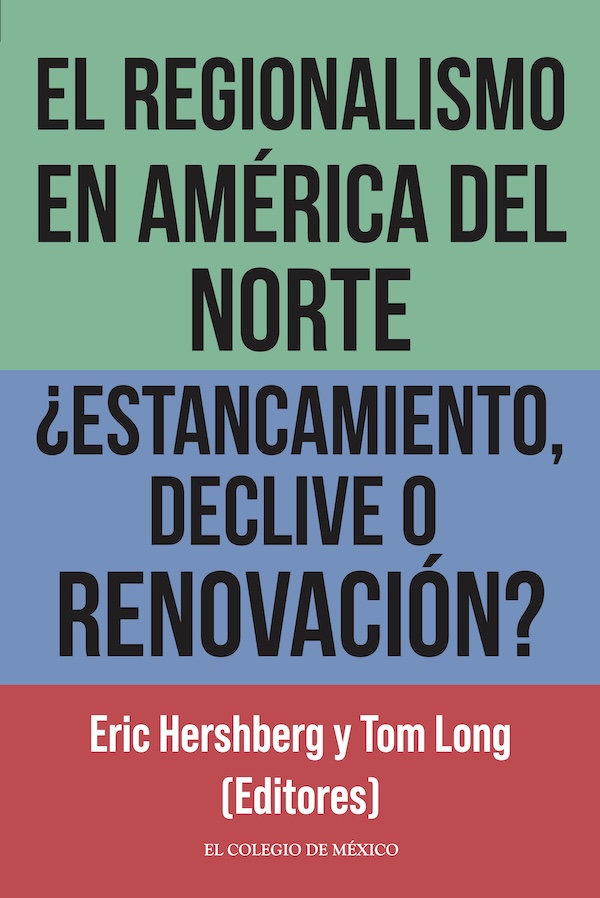
Nuestro reciente libro compilado sobre el regionalismo en América del Norte, co-editado con Eric Hershberg, acaba de salir en una nueva edición en español. Estamos muy felices que ha sido publicado por la Editorial El Colegio de México con el título El regionalismo en América del Norte: ¿Estancamiento, declive o renovación? La traducción estrena en un momento de gran importancia para la reunión, que vuelve a ser un punto de enfoque para una nueva administración presidencial en México. También lo es en las próximas elecciones en Estados Unidos.

El libro y su traducción son un resultado de unos siete años de colaboración a través de la North America Research Initiative (con base en la American University). El libro incluye contribuciones de expertos de Canadá, Estados Unidos, México y Europa, explorando temas de integración económica, seguridad, migración, y geopolítica.

La primera edición del libro fue publicado en inglés por la University of New Mexico Press en diciembre 2023. La traducción fue hecha por Knut Walter, y tuvimos un gran aporte de todo el equipo editorial de El Colegio de México. Un agradecimiento especial a la Profesora Celia Toro del Colmex, quien nos apoyó muchísimo con este proyecto.

Nuevo artículo sobre relaciones interamericanas

Mi nuevo artículo con Sebastián Bitar de la Universidad de los Andes acaba de salir en la Revista CIDOB d’affers Internationals, una de las más reconocidas publicaciones de Relaciones Internacionales en España. Entitulado “Del consenso a la complejidad: relaciones interamericanas diversas y en transición”, el trabajo explora el panorama cambiante de las relaciones entre los Estados Unidos y América Latina. Forma parte de un número especial, con una variedad de contribuciones sobre la geopolítica vista desde América Latina, coordinado por Ariel Sribman Mittelman y Mélany Barragán.

Desde la crisis financiera de 2008, la política internacional ha sido alterada por una mayor difusión de recursos económicos y capacidades militares. Ello, para muchos, constituye una transformación radical que puede ser el fin de la hegemonía estadounidense en América Latina. Este artículo examina esta proposición comenzando por revisar el concepto de hegemonía que, en lugar de verse como una característica estructural, aquí se conceptualiza como una «hegemonía matizada», es decir, una red de relaciones asimétricas y jerárquicas. En este sentido, se observa no una sola transformación, sino la emergencia de un contexto hemisférico que vendría definido por la «asimetría diferenciada». Estados Unidos aún ocupa una posición central, pero su política exterior está marcada por la fragmentación subregional y la externalización de prioridades electorales. Al respecto, se exploran sus efectos a nivel subregional con un enfoque en las oportunidades y los desafíos que ello supone para los países latinoamericanos.

El artículo está disponible libremente en este enlace.

Article in FP: Does Monroe still matter?

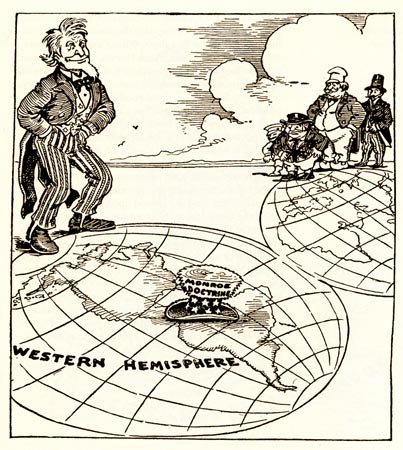
As the Monroe Doctrine marks 200 years since it was first enunciated, the time-worn US policy is back in the news. In a new article in Foreign Policy magazine, PAIS’s Carsten-Andreas Schulz and I examine the many meanings of the Monroe Doctrine and argue that it provides a poor guide for US-Latin American relations today. The article draws on their joint AHRC-funded project, “Latin America and the peripheral origins of nineteenth century international order.”


“The Monroe Doctrine is experiencing a resurgence. As it hits its 200th anniversary this month, this time-hallowed foreign-policy principle—which declares that Washington will oppose political and military incursions into the Western Hemisphere by powers outside of it—is once again at the forefront of political debates in the United States.

Republican presidential candidates such as Vivek Ramaswamy and Ron DeSantis are calling for the doctrine’s reinvigoration to take aim at China’s growing presence in Latin America and are offering it as a justification for a potential U.S. military attack on criminal organizations in Mexico. They are following the lead of former U.S. President Donald Trump, who hailed Monroe on the floor of the United Nations General Assembly, as well as advisors such as John Bolton and former Secretary of State Rex Tillerson.”

Read the rest at Foreign Policy.

Podcast interview

I joined Mark Leon Goldberg, editor of UN Dispatch, on his podcast Global Dispatches to discuss small states in world politics. I really appreciate his interest in the book and the theme. Mark is an experienced journalist who knows a great deal about world affairs, so it was especially fun to talk with him. “If you overlook small states, you are missing a complete picture of world politics today,” Mark says. I couldn’t have said it better myself!

You can read more about it here, or you can find and subscribe to the podcast on Spotify, iTunes, and other platforms.

Media coverage: Paraguay-Taiwan

Paraguay’s upcoming presidential elections have put the country’s relationship with Taiwan in the spotlight. The leading opposition candidate has said he would reevaluate the choice of diplomatic ties between China or Taiwan. With that happening, there’s been quite a lot of interest in the 2021 Foreign Policy Analysis article that Francisco Urdinez and I wrote: “Status at the Margins: Why Paraguay Recognizes Taiwan and Shuns China.” Links to the coverage below, and thanks so much to all these reporters for reaching out or for reading our research.

Qtd. in Christian Science Monitor, “What Paraguay election means for Taiwan, and US-China competition,” April 28, 2023.

Qtd. in Japan Times, “As Paraguay picks president, ties with Taiwan loom large,” April 28, 2023.

Qtd. in South China Morning Post, “Is Tawain about to lose Paraguay?”, April 23, 2023.

Ctd. in Al Jazeera, “Taiwan in the hot seat,” April 17, 2023.

Ctd. in The Progressive, “The other Americas,” March 2, 2023.

Ctd. in The Diplomat, “The South American election that has Taiwan scrambling,” January 17, 2023.

Book talks

Today (April 25), I will be presenting my recent edited book North America 2.0: Forging a Continental Future alongside my coeditor Alan Bersin at the Mexican Council for International Affairs (Comexi).

Update: a video of the presentation is available here.

We are very pleased to be joined by Shauna Hemingway, Deputy Head of Mission at the Canadian Embassy in Mexico City, as well as Comexi president and Sergio Alcocer, former Mexican Under Secretary of Foreign Relations for North America.

The presentation is being done in person at in Mexico City, although I will be joining online (sadly!). It starts at 10 a.m., CDMX/US Central; 5pm UK. Links for both online and in-person attendance are available via the tweet below. The book is available for a free download via the Woodrow Wilson Center.

I also had the opportunity to present my book, A Small State’s Guide to Influence in World Politics in a class at Georgetown University – Qatar (also virtually, although next time I hope to take up the invitation for a visit!). The students were absolutely great, and we had an engaged discussion of the challenges small states face in their foreign policies. Thanks so much to Prof Rory Miller and Dr Fahad Al-Marri for the invitation. I’ve been thrilled to see the continued interest in the book from across the world.

Books in the news…

As the year comes to a close, a bit of news on my 2022 books.

A Small State’s Guide

A senior fellow at the Carnegie Endowment for International Peace, Jennifer Kavanagh, listed A Small State’s Guide to Influence in World Politics as her “favorite wonky read” [as in policy wonk, or at least I hope!] of 2022. You can find all the fellows’ pick here. Thank you Jennifer!

She wrote: “The New York Times, leading political science journals, and international relations textbooks share one thing in common: they tend to focus on major powers (like the United States, China, India, and Germany) with large economies, powerful militaries, or global geopolitical sway and push aside smaller states (think of Estonia, Nepal, or Bolivia) and their interests.

Tom Long’s A Small State’s Guide to Influence in World Politics does the opposite, recasting small states as protagonist. He suggests that because small states greatly outnumber major powers, students of international relations miss a lot by not carefully considering their independent role.

Long argues that small states can wield meaningful influence and shape the behavior of major powers, but only under specific conditions—for example, where the small state’s preferences are aligned with those of a major power, on issues of high importance to the small state and low importance to the large one, and when small states band together to fill a gap left by major power initiatives. He then offers a range of strategies that small states can use to maximize their influence depending on the context. A set of twenty case studies, instances of small state success and failure across regions and issues, provides the reader with a close-up view of the opportunities and constraints small states face.

The book serves as a reminder that small states not only have agency but also matter a great deal to global outcomes, especially in an increasingly contested world.”

North America 2.0

A second op-ed with Alan Bersin was published last week in the San Diego Union-Tribune.

We write: “Because our societies and economics are so interconnected, investments in building bigger and better North American relationships can pay crucial, needed dividends at home. But what sort of North American agenda can strategically enhance regional competitiveness, while remaining politically viable from standpoints both of implementation and popular acceptance in Canada, Mexico and the United States?”

The piece is entitled, “It’s time for a bigger, better North America” and you can access the whole piece here.

Op-ed in The Hill

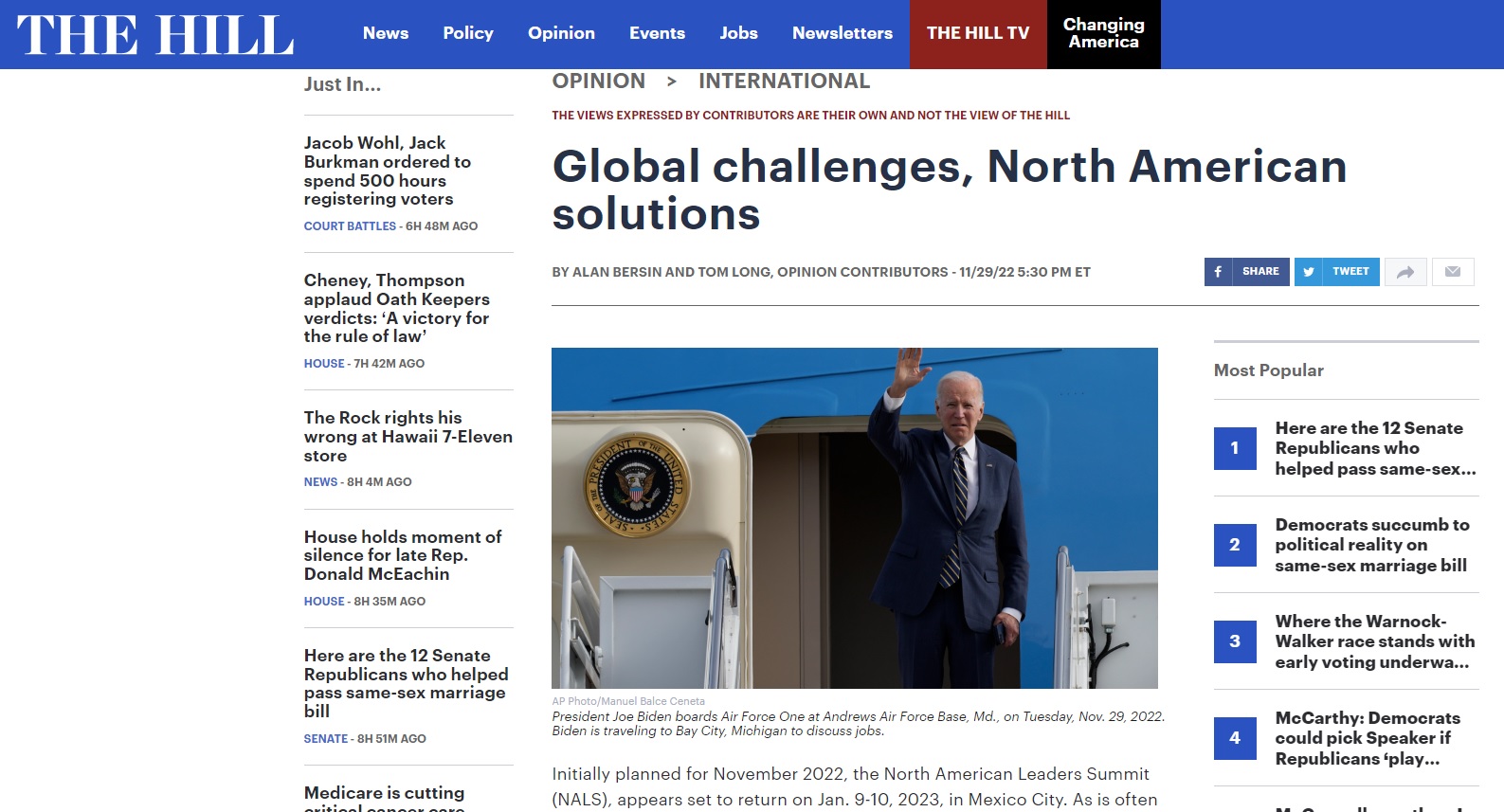
I’m happy to see my first piece published in The Hill, co-written with Alan Bersin. The op-ed, “Global challenges, North American solutions,” seeks to animate discussion about why there’s a big, strategic reason for prioritizing cooperation in North America.

We write that, “[T[he next North American Leaders Summit presents a timely opportunity to begin. President Biden ought to arrive in Mexico City with a bold vision for invigorating trilateral cooperation where that is needed and feasible — and for  bolstering U.S. leadership in the world through its broader neighborhood.

“[T]here is no denying any longer the critical importance of Canada and Mexico — and the smaller countries of Central America and the Caribbean basin as well — for the United States’ own security and prosperity. Because our societies and economics are so interconnected, investments in these relationships can pay crucial, needed dividends at home.”

The op-ed draws on and supports our recent edited volume, out now with the Woodrow Wilson Center.