Panama 1826: The other American anniversary

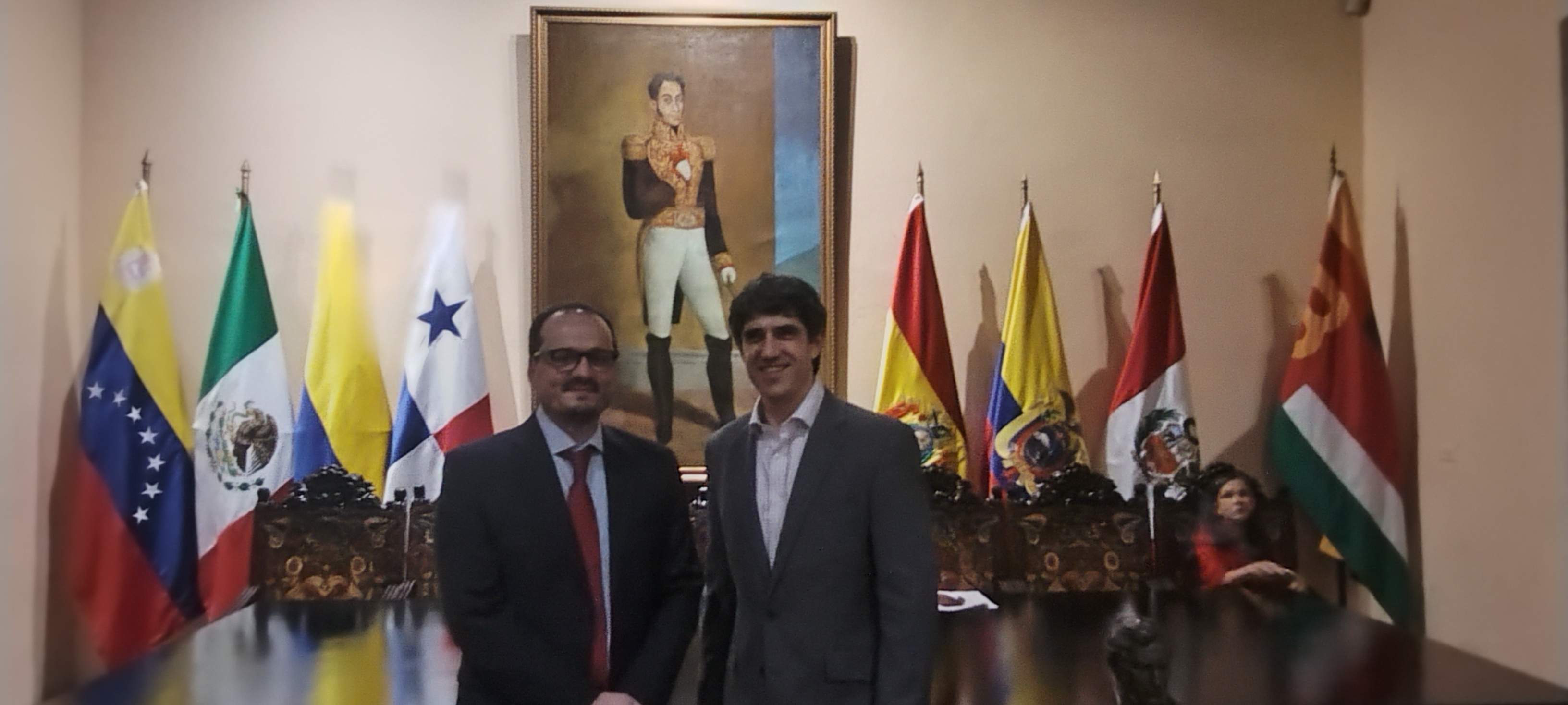
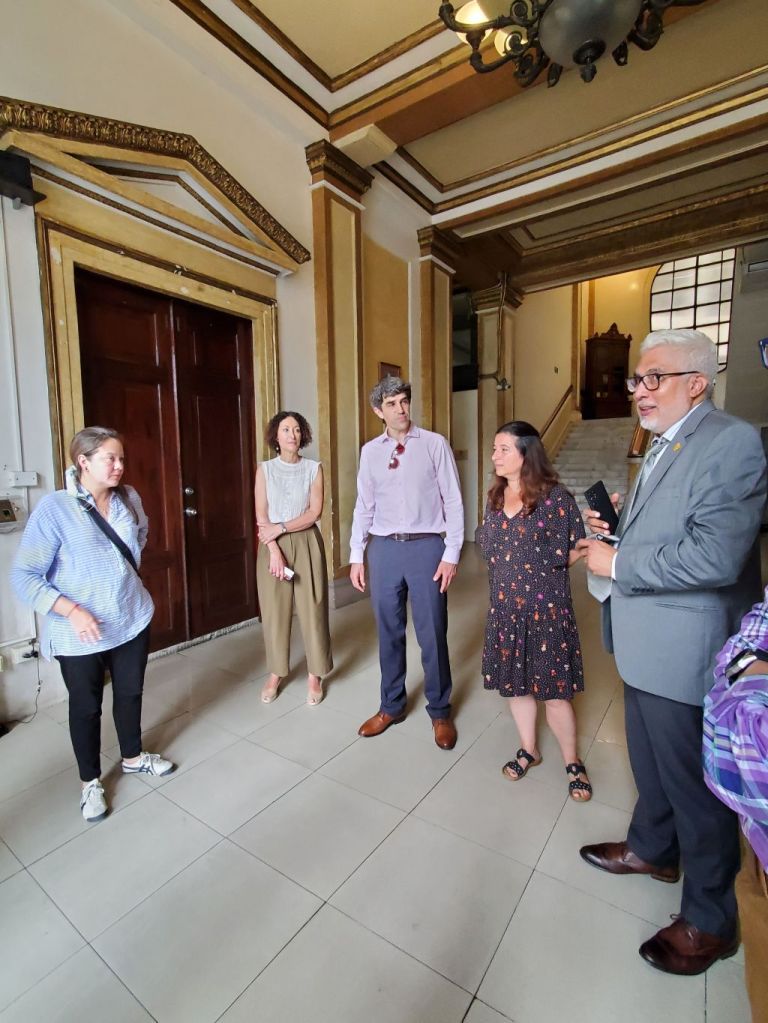
With my friend and co-author Carsten-Andreas Schulz in the room where, legend holds it, the 1826 Congress of Panama met. Today, it is inside the Foreign Ministry.

In June and July, a handful of diplomatic history enthusiasts (and many more people in Panama) marked the 200th anniversary of the first diplomatic conference in the Western Hemisphere, the 1826 Congress of Panama. After participating during the last two months in various discussions and reflections on the Congress and its legacies (both of which feature in our forthcoming book), my co-author Carsten and I wrote an essay for Foreign Policy, entitled “The Other American Anniversary.” This was something of a capstone after an event at Cambridge, a trip to Panama, and a high-level discussion of inter-American relations today.

First proposed by Simón Bolívar as a way to fend off European attempts at reconquest–independence in the former Spanish colonies was only a few years old and tenuous–the conference also aimed to create a sort of league of perpetual peace among the signatories. After some debate, the United States was invited despite Bolívar’s initial reticence. Many in the U.S. were even more hesitant, not least because the conference proposed a ban on the slave trade. A huge debate erupted in the U.S. Congress. Henry Clay was enthusiastic, imagining great opportunities in U.S.-Latin American relations. Others, much less so. Senator John Randolph was scandalized at the notion that U.S. diplomats would consort with Catholic Spanish American diplomats, sitting “beside the native African, their American descendants, the mixed breeds, the Indians, and the half breeds, without any offence or scandal at so motley a mixture.” Eventually the United States did decide to send two representatives. One died on the way (international travel in 1826 was not to be taken lightly) and the other arrived after the meeting ended. It was not the most auspicious beginning to inter-American relations. Among those who arrived and participated, they negotiated remarkably ambitious treaties, full of innovative ideas for reimagining international relations. Unfortunately, only the host countried ratified them.

Still, the Congress of Panama became a frequent reference point, and something of an empty signifier. At one moment, George W. Bush proclaimed it the fountainhead of Pan Americanism and the Organization of American States. The next, Venezuela’s Hugo Chávez (who called Bush the devil in the UN Assembly no less), said that 1826 was the start of Latin America’s anti-imperial and anti-U.S. tradition.

In short, the bicentenary of the Congress of Panama is an opportune moment for reflection on the current, turbulent state of affairs in the Americas. I’ve been doing just that over the last couple of months. On May 7, my collaborator Carsten-Andreas Schulz organized a workshop on the Congress at Cambridge University. It included a keynote by Panama’s Vice Minister of Foreign Affairs, Carlos Guevara Mann (himself a Bolívar devotee).
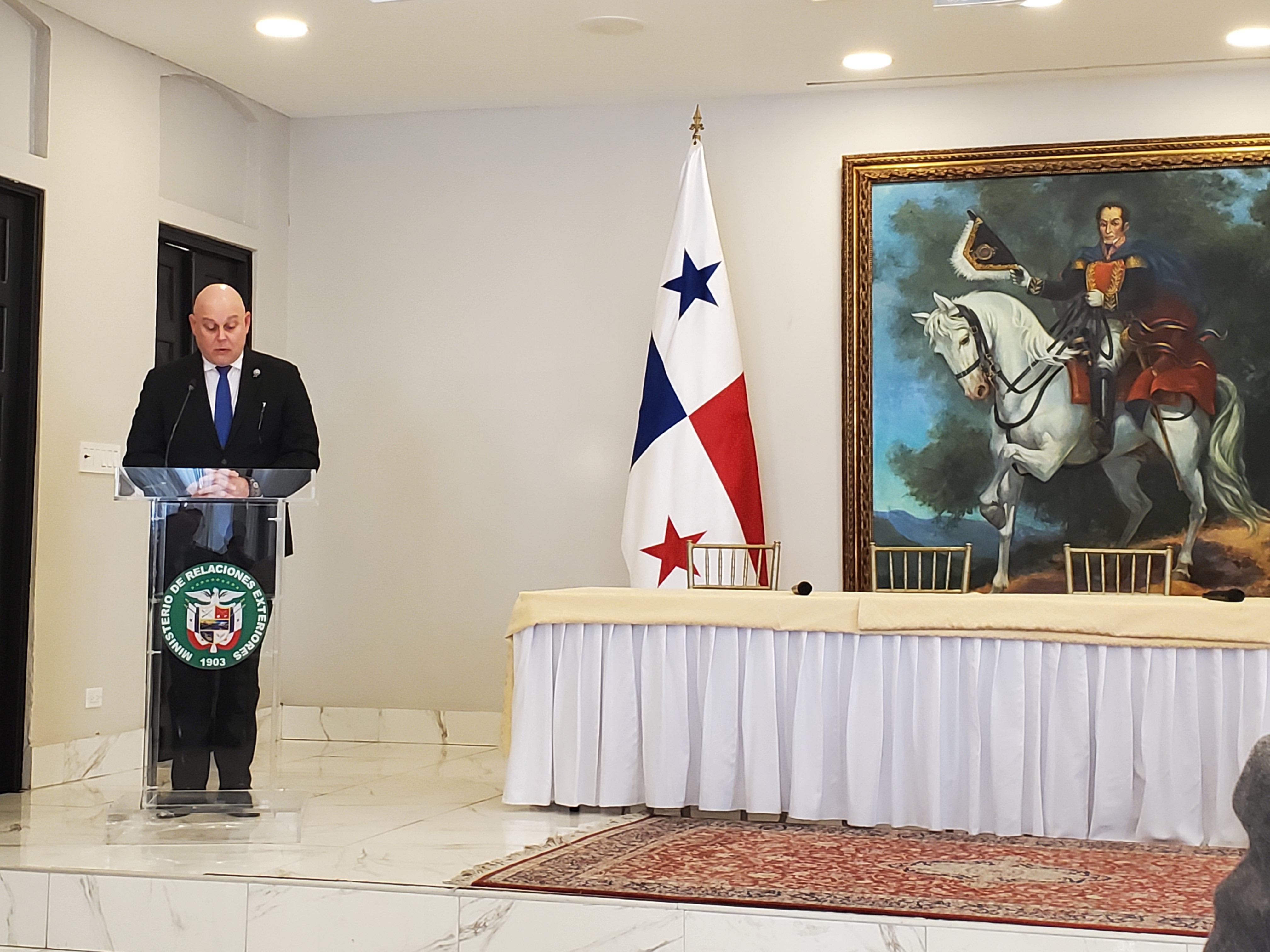
Panamanian Vice Minister Guevara Mann, speaking in Panama City.

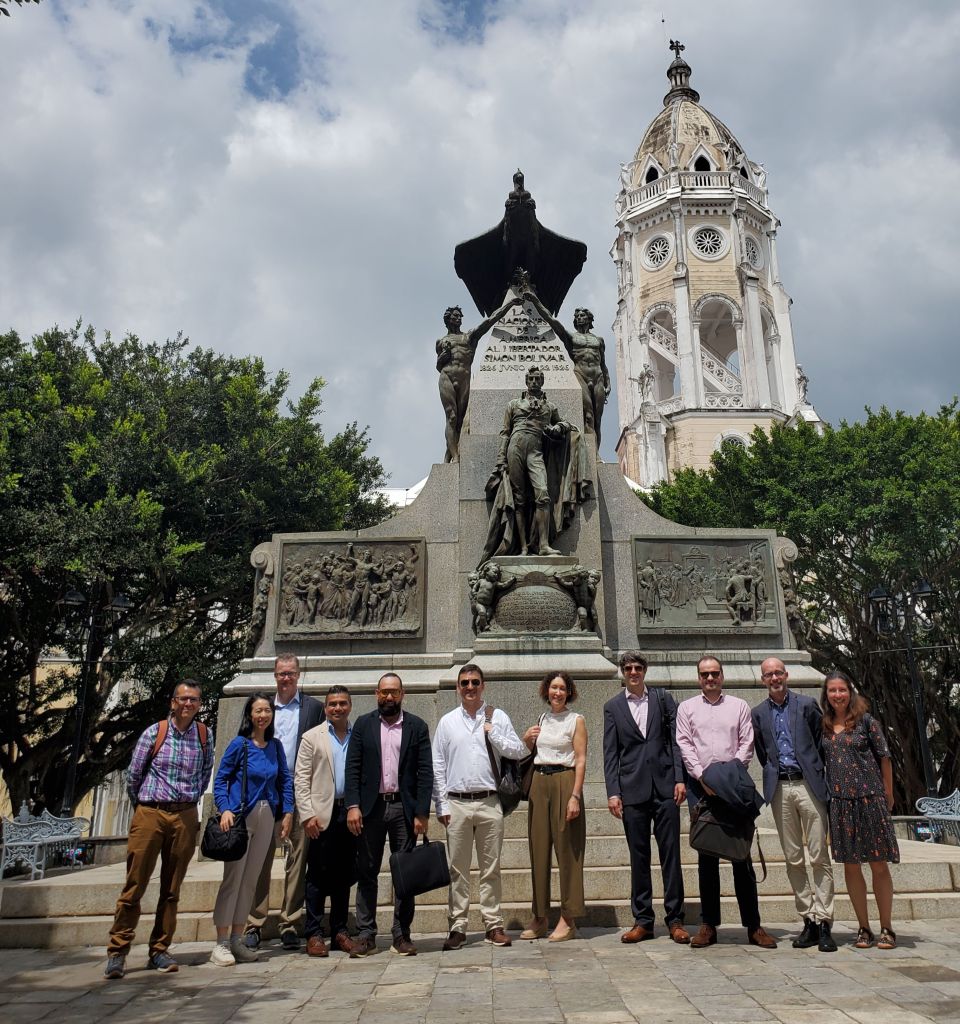
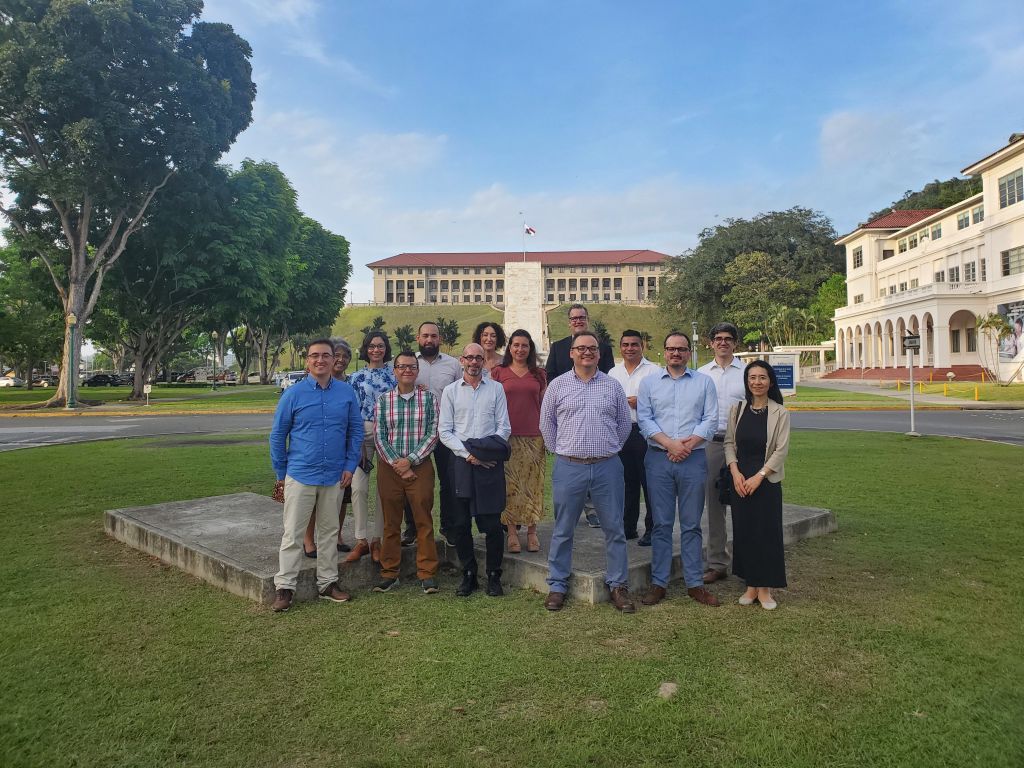
Two weeks later, Carsten and I travelled to Panama City for an excellent several days of events and talks commemorating the bicentenary. The Vice Minister more than reciprocated the hospitality. The event was organized by David Marcilhacy of the Sorbonne, Félix Chirú Barrios of the University of Panama, and Raúl Román Romero of the National University of Colombia, and also supported by the Foreign Ministry as part of its programs on the bicentenary. We had sessions at the University of Panama and at the Foreign Ministry, as well as a busy schedule of cultural visits and meals (photos below). In a highlight, we had a session in the room that likely played host to the Congress, and has been preserved for special events within the Foreign Ministry. For me, it was wonderful to be back in Panama and in this building, given that I spent weeks in the archives of the ministry while I was working on my PhD.
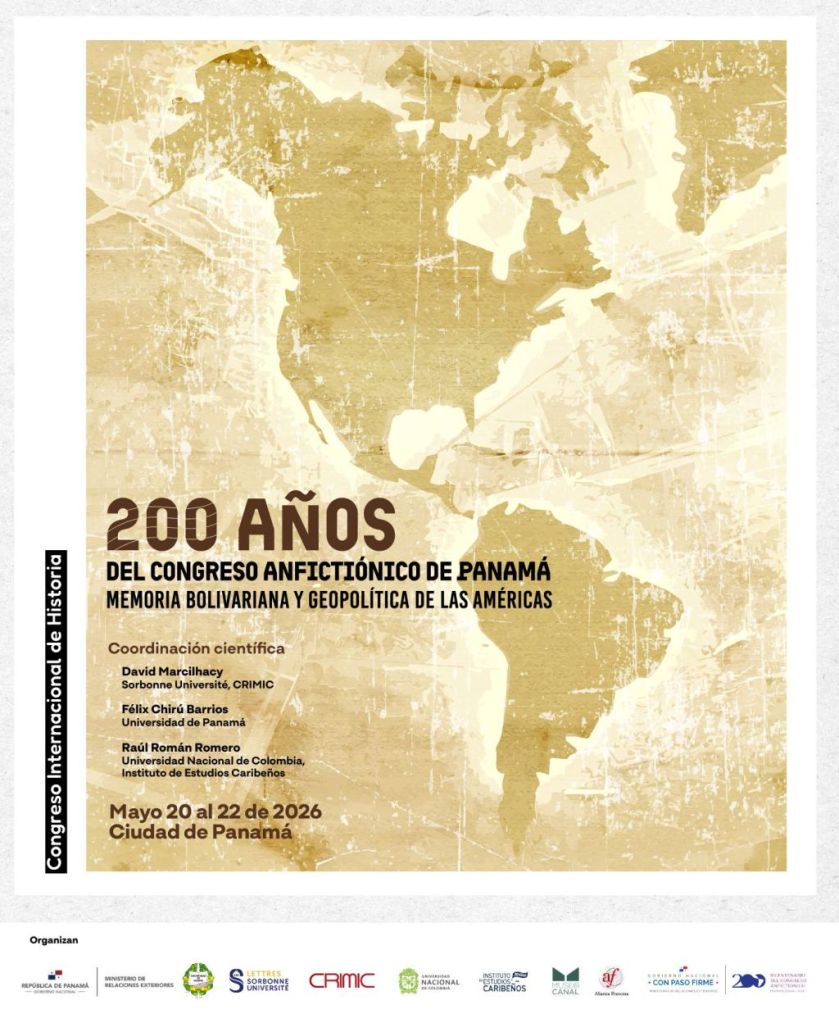
Finally, on July 1, I participated in an online discussion hosted by Pan American Strategic Advisors and Young Professionals in Foreign Policy. The virtual panel included Ana Irene Delgado, Panama’s ambassador to the OAS, former U.S. ambassador to the OAS Frank O. Mora, and former National Security Council director for Latin America, Professor Rirchard Feinberg, along with Adam Ratzlaff of PASA.
Conversations with NY Times and SCMP

I’ve been meaning to add some posts here for a long time, but it always seems to slip off the agenda. I’ll try to play a bit of catch up, mostly regarding some conversations with the media and events and an essay relating to the “other American anniversary” that fell in July: the bicentenary of the 1826 Congress of Panama.

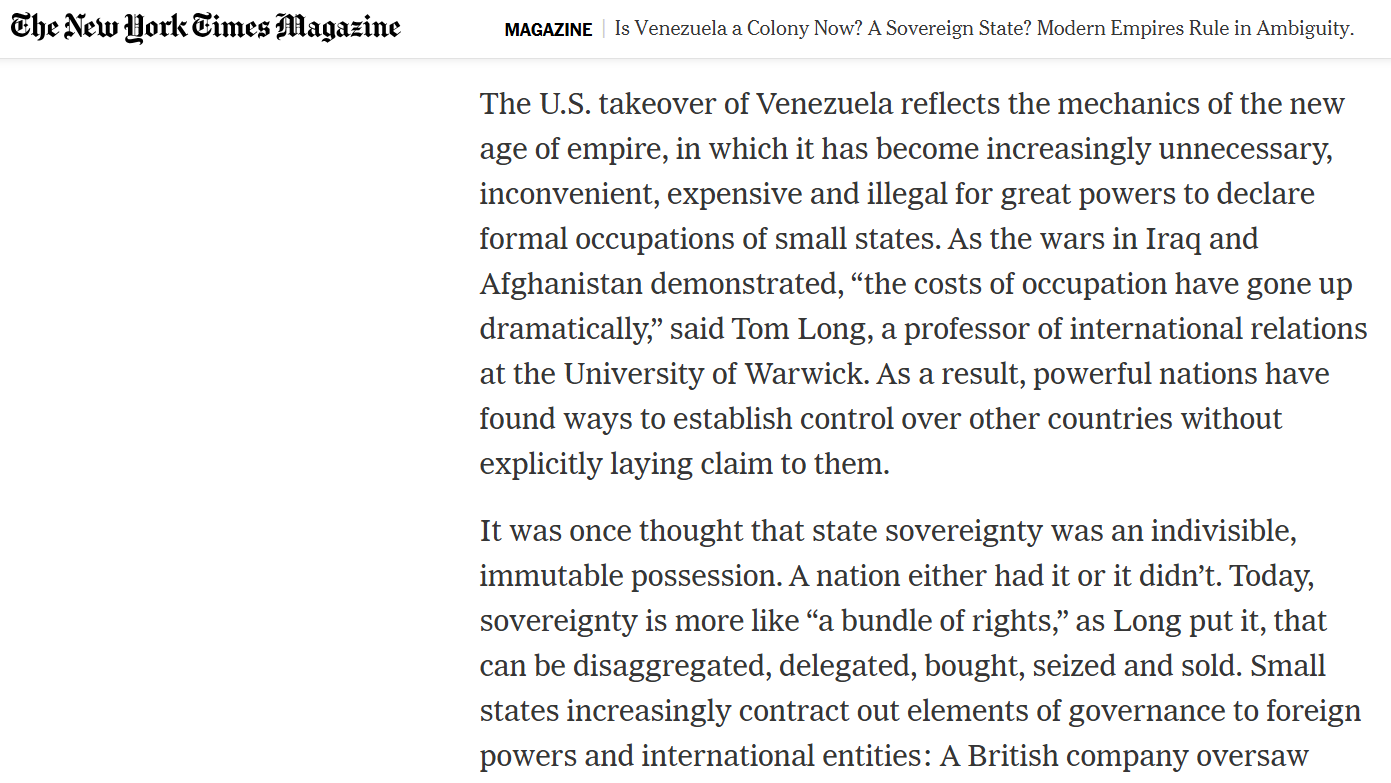
But first, twenty years after graduating from Mizzou’s journalism school, I’ve finally made it into the New York Times! Well, I’m quoted there, anyhow. (My attempts to land an op-ed haven’t worked out yet.) Check out the thought-provoking article, “Is Venezuela a Colony Now? A Sovereign State? Modern Empires Rule in Ambiguity.”

I had some excellent conversations with writer Linda Kinstler for her piece in the Magazine about the nature of Venezuelan sovereignty since the January 2026 seizure of Nicolás Maduro. The United States has treated the country as a sort of vassal, with Marco Rubio acting as a sort of governor-general in absentia, and the United States managing state revenues and expenses. What the United States has not done is to occupy Venezuela. Although the U.S. physical presence has increased since the earthquakes, the model is to try to “run” Venezuela from offshore.

Secondly, I wanted to share an article in the South China Morning Post, published to mark the 250th anniversary of the US Declaration of Independence, with a reflection on the evolution of US-Latin American relations. What do the United States’ relations with its nearest neighbors tell us about the country and its rise to global power? The article, “America’s first sphere of influence becomes the test of its power at 250,” by Teresa Elena Frontado and Igor Patrick is worth a read.

More soon…

Visit to Chile

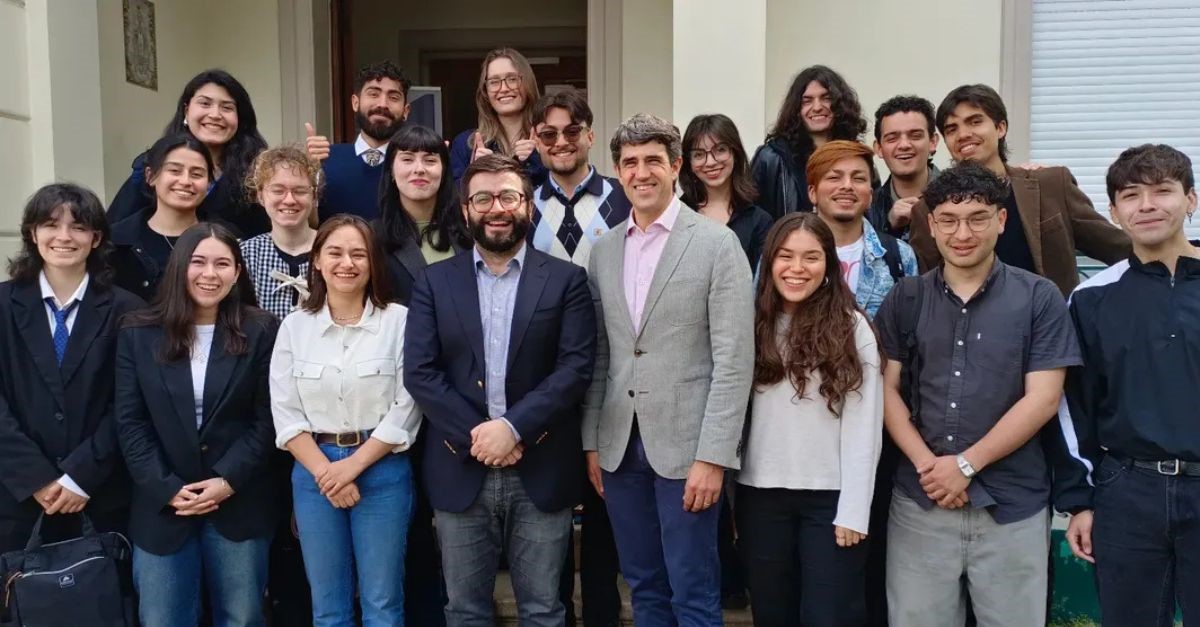
Belatedly, I wanted to post a few remarks on my visit to Chile from October 12-18. I went to Santiago at the invitation of colleagues at the Instituto de Estudios Internacionales at the University of Chile, especially Federico Rojas and my former PhD student Cristóbal Bywaters. It was my first time back in Santiago since spending nearly four months there on a Fulbright visiting professorship in mid-2018. It was tremendous to be back in this great city, to see old friends, and to build new connections with scholars, diplomats, and students.

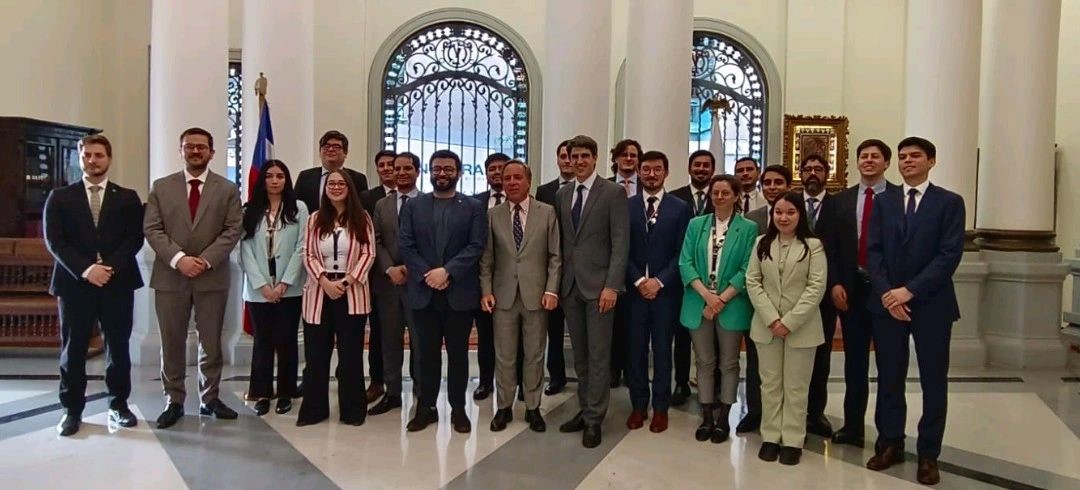
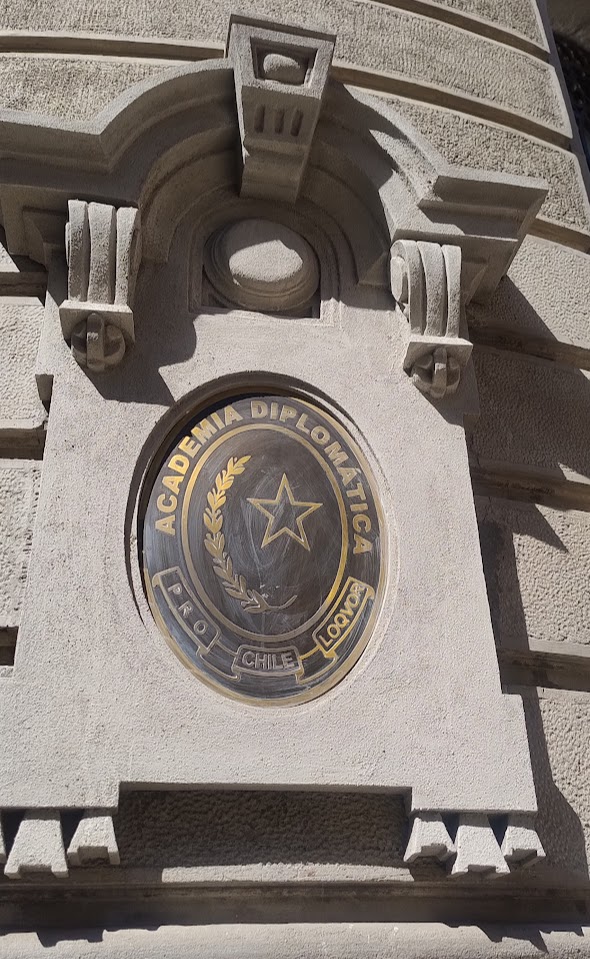
During the week-long visit, I had a busy agenda, with a number of talks and sessions, as well as a couple of days in the Chilean foreign ministry archives. On Monday, I visited the IEI and met with with colleagues there and toured the facilities. Later that day, I had the great privilege of presenting my book, A Small State’s Guide to World Politics, at the Chilean Diplomatic Academy. Many thanks to Director Ambassador Hernán Bascuñán and his team for the invitation, and especially to the students for their attention and excellent questions.

On Wednesday, I joined a fantastic group of students, who have created a discussion group on foreign policy analysis. We talked about Latin American and Chilean foreign policy, as well as small states in international politics.

In the afternoon, I presented at the department seminar, sharing work-in-progress on the design of the League of Nations. Finally, I gave a talk as part of the Regionalism Seminar Series, supported by the CAF Development Bank of Latin America. I talked about the challenges of sustaining regional cooperation and organization, with illustrations from Central America.

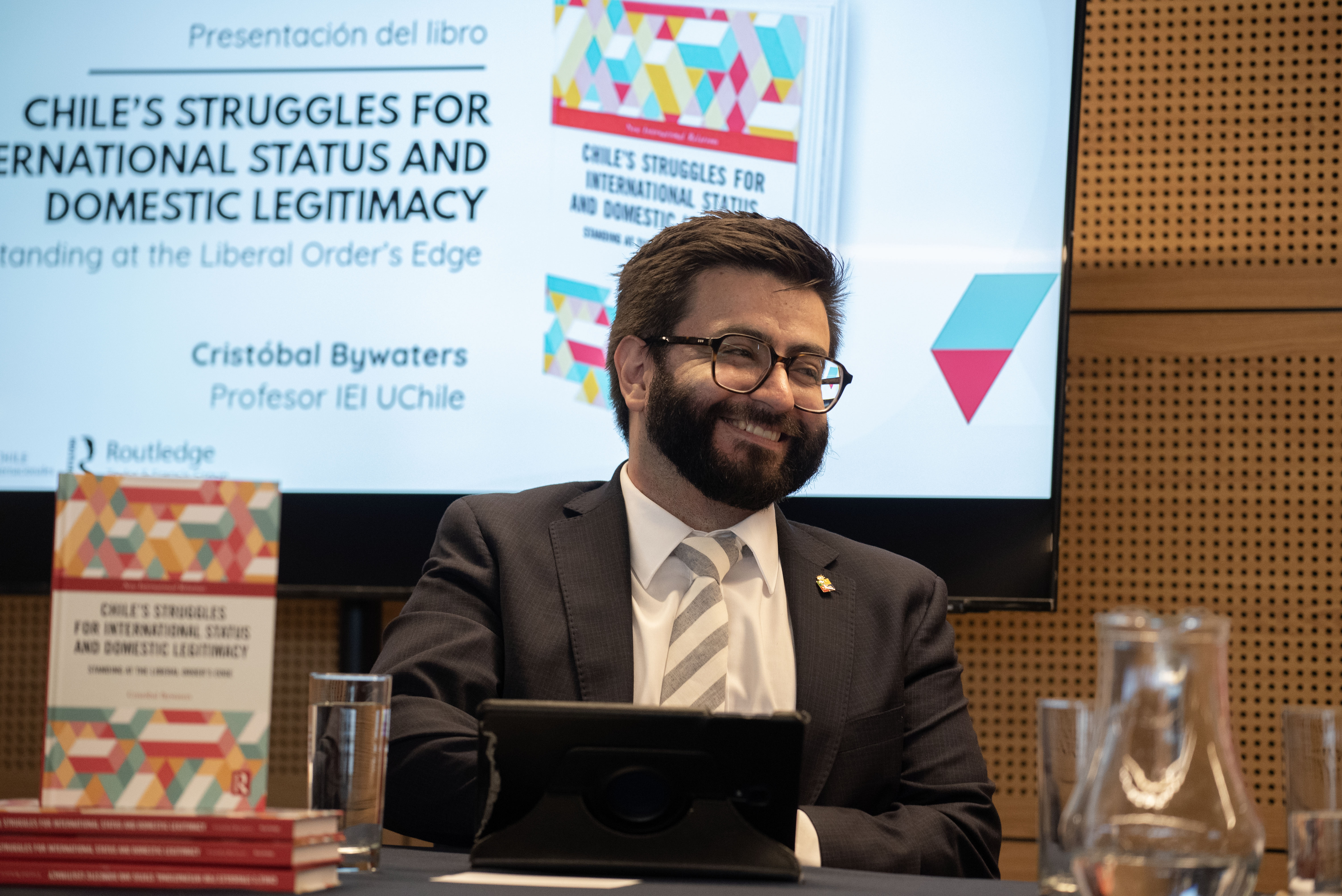
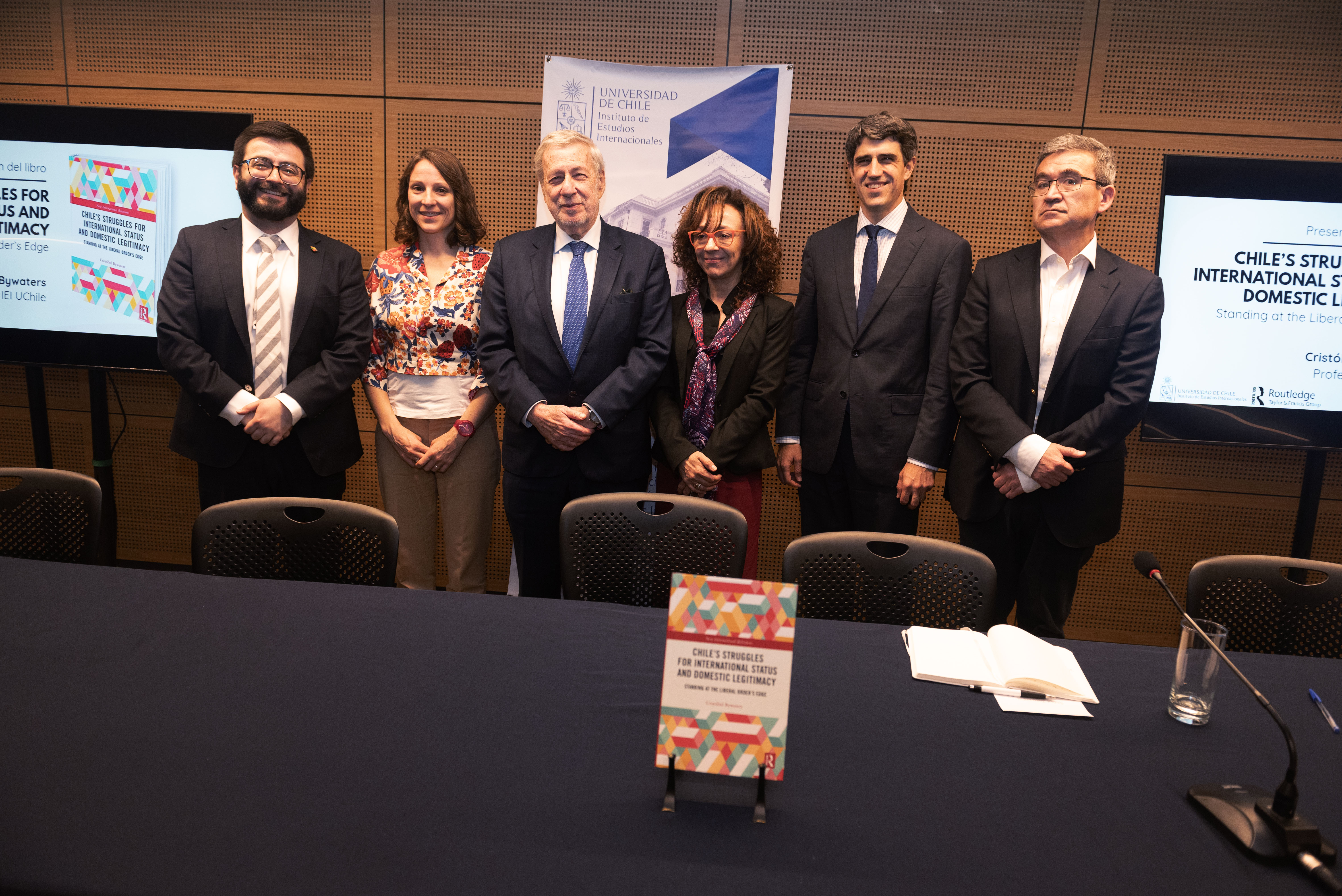
On Thursday evening, we had a real higlight, as Cristóbal presented his new book, Chile’s Struggles for International Status and Domestic Legitimacy
Stand
ing at the Liberal Order’s Edge. It was a real honor to see my student present the work that originated with his PhD thesis in front of a packed house, with a panel including Foreign Minister Alberto Van Klaveren, and an audience with other former ministers, ambassadors, and leading experts.

Many thanks to Cristóbal Bywaters, PhD and the Instituto de Estudios Internacionales (IEI), Universidad de Chile for hosting me.

The Berlin Conference and Latin America

The 1884-85 Berlin Conference is one of the best known and most infamous examples of European imperialism and the “Scramble for Africa.” How did Latin American states, the world’s first collection of post colonial countries, respond?

In a new article, with my brilliant co-author Carsten-Andreas Schulz, we examine this question. It’s out now in the Journal of Global History: “Seeing the Berlin Conference from the periphery: Latin American reactions to imperialism elsewhere, 1884–85″.

Although no Latin American states were invited, their diplomats paid close attention and offered strong responses. Carlos Calvo, perhaps the region’s most famous lawyer of the period, managed to attend. Their arguments reflected both resistance to imperialism and complicity in its logic. By tracing Berlin’s reverberations across multiple regions, we highlight the broader repercussions of late nineteenth-century ‘high imperialism’ and reassesses the nature of Latin American anti-imperialism.

On the one hand, Colombian diplomat Ricardo Becerra proposed a counter-conference to reject the principles advanced at Berlin. Scandalized by the proceedings and by the application of Berlin’s new colonial doctrines in the Pacific, he wrote: “If these are the notions of justice and international morality of the most enlightened statesmen of Europe, well-justified is the fear that tomorrow, when the Panama Canal opens, for example, that the same Germany or another power would apply to our deserted coasts of the Darien the doctrine subscribed in Berlin and already practiced with respect to the Carolines.” Brazil’s diplomat in Berlin expressed similar fears that the South American country might find itself victimized by imperial expansion.

On the other hand, the famous Carlos Calvo managed to attend the conference, drawing on his reputation in international law. Once there, he defended not the rights of Africans but those of Portugal’s traditional claims. Argentina, Brazil, and Mexico soon recognized King Leopold II’s Congo Free State, in an episode seemingly overlooked in the historiography.

The article is part of our AHRC-funded project on Latin America and the making of international order in the late nineteenth century. It draws on archival research in Argentina, Brazil, Chile, Colombia, and Mexico, as well as documents from France, Germany, the UK, and the US.

Check it out, open access.

Seeing the Berlin Conference from the periphery: Latin American reactions to imperialism elsewhere, 1884–85


Abstract: The Berlin Conference (1884–85) is widely studied for its role in fuelling European imperialism and legitimising the scramble for Africa. However, its global impact beyond Europe and Africa has received little attention, with Latin America notably absent. This article examines how prominent diplomats from Argentina, Brazil, Colombia, and Mexico interpreted the proceedings. In their view, Europe’s renewed expansionism in Africa—combining private adventurism, colonisation enterprises, and imperial statecraft—resembled the great powers’ incursions into post-independence Latin America. They feared that new criteria for staking colonial claims would endanger their states’ sovereignty over vast, remote territories. Yet, while opposing intervention, these diplomats embraced civilisational thinking and state-building projects that echoed Eurocentric racial hierarchies. Their arguments reflected both resistance to imperialism and complicity in its logic. By tracing Berlin’s reverberations across multiple regions, this article highlights the broader repercussions of late nineteenth-century ‘high imperialism’ and reassesses the nature of Latin American anti-imperialism.

Article in GJIA

Carsten-Andreas Schulz and I have an essay in the new issue of the Georgetown Journal of International Affairs. In it, we give a synthetic view of inter-American relations over the two centuries since Latin American independence. Against this historical backdrop, we focus on what changes within the hemispheric and at the global level will mean for U.S.-Latin American relations.

Article abstract

The two hundredth anniversary of the Monroe Doctrine provides an opportunity to make a somewhat contrarian point: U.S.-Latin American relations are not as unidirectional as commonly suggested. Though the international relations of the Americas have been characterized by the power disparity between the United States and its neighbors, it is misleading to imply that U.S. dominance equated to unilateral determination of inter-American relations since 1823. On one hand, the United States’ history of interventions, browbeating, and heavy-handedness is well known. Undoubtedly, asymmetry has played a significant role in shaping identities, interests, and designs of states in the Western Hemisphere. However, on the other hand, the disparity of power should not be understood as directly determining outcomes: the powerful state has not always prevailed; the weak have not always cowered. Instead, smaller states in the region have contested, cooperated, and co-constituted tin their relationships. In this piece, we aim to emphasize how Latin America has found spaces to pursue its interests in the interstices of asymmetry. Meanwhile, the United States has often fallen into an “insecurity dilemma,” exaggerating threats despite its position of much greater power and responding in ways that complicate cooperation.

Read “In the Interstices of Asymmetry: Two Centuries of U.S.-Latin American Relations”, open access, thanks to JHU Press and Project Muse.

It is time for a new U.S. approach: if Latin America is cast largely as a place from which ‘threats’ emerge instead of as a partner, the United States will alienate allies and struggle to build the security it desires.”

Cite: Tom Long and Carsten-Andreas Schulz. “In the Interstices of Asymmetry: Two Centuries of U.S.-Latin American Relations.” Georgetown Journal of International Affairs 25, no. 1 (2024): 132-143. https://dx.doi.org/10.1353/gia.2024.a934896.

Article in Foreign Policy: AMLO and Juárez

On October 1, Mexico’s Andrés Manuel President López Obrador will finish a momentous six-year term. He will be handing over the National Palace to his handpicked successor, Claudia Sheinbaum. No one doubts that AMLO has been a transformative president. He upended Mexico’s political party system, dominated the media and the agenda, and yet left office with sky-high approval ratings. To his final days, he has also elicited strident critiques from those who see him as a threat to Mexico’s democratic and economic model.

In foreign affairs, however, AMLO’s transformative effects are less clear. He is oft-maligned as internationally ignorant, and even isolationist. He rarely travels abroad, and he made clear his focus would be at home. This has led, we think, to misinterpretations of the outgoing president’s worldview.

In a new article for Foreign Policy, Carsten-Andreas Schulz and I argue that AMLO’s legacy is better understood as an attempt to revive the republican internationalism of his hero Benito Juárez. We draw on our recent article in the American Political Science Review, “A Turn Against Empire: Benito Juárez’s Liberal Rejoinder to the French Intervention in Mexico.”

What I’m reading: The War That Ended Peace by Margaret MacMillan

Margaret MacMillan, The War That Ended Peace: How Europe Abandoned Peace for the First World War, Random House (2014)

My reading list is a year behind in marking the centennial the First World War’s onset, which occasioned an outpouring of new and reissued histories. (Now many of those books are available in paperback, so a year behind isn’t so bad.) I had read MacMillan’s impressive Paris 1919. My appreciation for that book led me to grab The War That Ended Peace of a bookshelf lined with World War I-themed competitors.

Paris 1919 tells the story of the peace conference that had such a dramatic impact on questions of nationalism, territory, reparations, and international organization that continue to haunt us today. The lessons of 1919 felt current without having to be explicitly stated, in that they contextualized later and contemporary developments. It brought its major figures to life, with vivid portraits of Woodrow Wilson, Lloyd George, George Clemenceau, and others. The book admirably showed how factors from different “levels of analysis” affected decision-makers, and how those mixed with personal conflicts, boredom, and exhaustion.Continue reading “What I’m reading: The War That Ended Peace by Margaret MacMillan”