I will be joining the Oxford Latin America Centre’s weekly History seminar this Thursday (1 December) to present on my new and ongoing research on the recreation of the Inter-American order in the waning days of World War II. Details are here. The work has been supported by a grant from the British Academy, (soon) by the Truman Library Institute, and (later, for writing) by a University of Reading Research 2020 Fellowship.
Decades ago, Fidel Castro told my mentor, Robert Pastor: “I know what your country’s policy towards me is. It’s to wait for me to die. And I don’t intend to comply!”
Eventually, we all comply with that particular policy. Castro indelibly shaped the lives of generations of his fellow citizens in Cuba, sometimes for better by instilling national pride, increasing national independence, and improving health, arts, and education; and often for worse, by hanging onto power for decades, repressing dissent, and pressing on with disastrous policies that maintained state control but impoverished the country. His is a life that historians will debate for a very long time.
Here are some of the first takes of history:
El Universal (Mexico), with the video of Raúl Castro’s announcement on Cuban TV
Many thanks to CPDOC at Fundação Getùlio Vargas for taking the time to talk with me about my work for their Pocket Talks series. I talk a little about my book, Latin America Confronts the United States, and about the archival research I was doing in Brazil over the summer. It was an honor to spend time at CPDOC as a visiting researcher this summer.
On Oct. 7, Colombia’s president Juan Manuel Santos was awarded the Nobel Peace Prize for 2016. This comes on the heels of a referendum in which Colombian voters rejected Santos’ peace accords with the rebel Fuerzas Armadas Revolucionarias de Colombia (FARC) by a razor-thin margin. The announcement surprised some Nobel observers who argued that the negative vote in the referendum had sunk the Colombian president’s Nobel. Some went so far as to declare Colombia “off the list of Nobel Peace Prize contenders” (in a headline, no less). So, why did Santos win and what does it mean for peace? Here are five questions on President Santos and the Nobel Peace Prize.
Why did Santos win? Didn’t peace fail in Colombia? The peace accords failed the vote, but peace is still alive — though at serious risk. Before the vote, Santos repeatedly said that there “was no Plan B” if the accords were rejected by voters. That seems to have been the case. Neither the government nor the opposition had a clear next step. However, Santos quickly convened opposition leaders, including former president Álvaro Uribe, and made public declarations that Colombia should not return to arms. This was echoed by the leadership of the FARC, though the group is not yet leaving its weapons. In this context, the Nobel is not only a recognition of Santos’ efforts over four years. It is a statement from the committee that the peace process must continue — and that it should move forward under the leadership of President Santos. The talks have continued this week, as the “No” camp is clarifying its own position.
Why did the award go to Santosalone?
In the past, the Nobel committee has recognized former adversaries with shared awards. Most notably, this includes Nelson Mandela and F.W. de Klerk in South Africa and Yasser Arafat, Yitzhak Rabin, and Shimon Peres in the Middle East peace talks in 1994. Could this award have been shared with the FARC leadership? The ‘No’ vote erased that possibility, but it was small to begin with. The referendum made clear the group’s deep unpopularity given a record of rights violations, and Colombians would have bristled at a FARC leader’s inclusion. Certainly, many despised Arafat for his past actions, too, but the Palestinian leader could claim a large constituency in a way the FARC cannot. More importantly, it would not have been helpful to the ongoing talks with the opposition, and that was a foremost concern for the committee. While the award has Santos’ name on it, the committee’s statement goes to great lengths to recognize the Colombian people and victims of the conflict — and to urge them to continue working for peace.
Is the Nobel Committee trying to influence the peace process? Yes, in a sense.The award is a statement of support from the international community for peace. International support is fairly undivided, even as the question splits Colombians. The peace process brought together the Obama administration with Venezuelan President Nicolás Maduro, one of the few issues on which the two governments agree. The award may buttress Santos’ prestige and position to some extent, but the fact is that he remains unpopular domestically.
Will the Nobel Peace Prize help the cause of peace in Colombia? Perhaps not. In the wake of the referendum, it has become increasingly clear that leaders of the opposition were less concerned about particular clauses of the peace deal than about their political futures and legacies. Above all, it seems that Uribe seeks to place his own stamp on the agreements — and to claim a share of the credit for the peace. The prize further marks Santos as the man of peace, and it might not help relations between the current president and his predecessor. There is an element of ego in the political contest between the two men. At the moment, the key questions are whether the two sides can agree on a deal, and whether that deal will be palatable to the FARC leadership and rank-and-file, as well as to victim’s groups who strongly supported the initial accords. It is not clear any of those actors will be impressed by the Nobel.
Would Santos have won if the referendum had passed?
Quite possibly, but with a very different narrative. If the referendum had won by a wide margin, as many pollsters expected, then Santos would have won for bringing the Colombian population from war toward peace and forgiveness. With peace hanging in the balance, the Nobel is a vote for hope. The referendum made clear the political gamble Santos took for peace. The Nobel is a fine reward, but ultimately a lasting peace with broader domestic and international support is the prize Santos wants and Colombia needs.
I finally found the interview I did with BBC 5 Live radio with Dotun Adebayo of “Up All Night.” I didn’t hear it air live, because the show really is “all night.” It aired around 4 a.m. in the UK! Anyhow, it is available now at the 3:17:30 mark through the BBC Radio player and we talked for seven or eight minutes. Thanks to Dotun and BBC Radio for having me on.
I have a new article up at Latin America Goes Global, the excellent site managed by Chris Sabatini and company. The piece draws on my research in Latin America Confronts the United States on the initiation of Plan Colombia, in the context of Colombia’s previous round of peace talks with the FARC under President Andrés Pastrana.
Pastrana has emerged as one of the most vocal opponents of the current peace accord, negotiated by the administration of Juan Manuel Santos. Given his own legacy, this has surprised many — including some prominent members of the Pastrana administration’s peace effort.
In the article, I describe Pastrana’s own commitment to peace during his presidency, describe his opposition to the current accords (drawing on his prodigious public commentary), and compare those criticisms to his legacy.
Pastrana’s own peace talks didn’t get far beyond establishing a 12-point agenda. The president was famously jilted for a meeting by FARC commanders.
From the piece:
“While many foreigners have been swept up in the excitement over the peace agreement between the Colombian government and the Fuerzas Armadas Revolucionarias de Colombia (FARC), Colombia’s own political class is more divided. For one, President Juan Manuel Santos faces stiff opposition from two of his presidential predecessors, Álvaro Uribe and Andrés Pastrana.
The positions these former presidents have adopted—and how those positions are perceived—matter. Both men, especially Uribe, retain influential bully pulpits. Though, to a lesser degree, Pastrana’s word also carries weight as a president who himself tried and failed to reach a peace agreement with the FARC.”
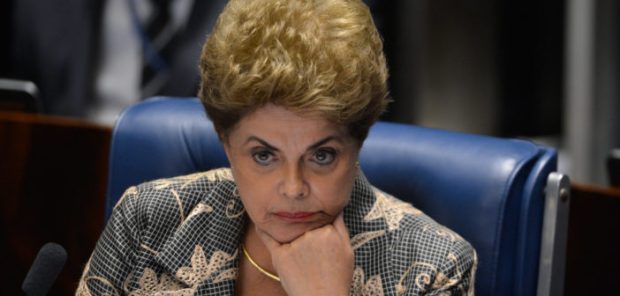
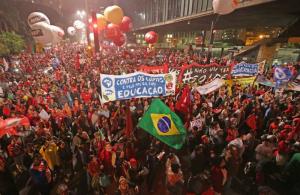
Rio de Janeiro — This was a historic week in Brazilian politics. The Brazilian Senate voted suspected President Dilma Rousseff definitively out of office by a substantial margin. The interim President Michel Temer took office, briefly, before going abroad for a G20 meeting in China. And though the streets did not fill with enraged multitudes, as they did many times over the last two years, the Brazilian population is deeply divided on how to interpret – and how to speak about – the events that have unfolded over the last several months.
The debate has centered around one word: “golpe” or coup. In most of the political discourse and press, there are two sides to this rhetorical coin. Dilma and her supporters – including, it seems, many in the international Latin American studies community – denounce her ouster as a “coup.” Dilma repeatedly did so in her impassioned, 12-hour defense in the Senate on Monday. She also repeatedly termed Temer “the usurper.” (Dilma picked Temer as vice-president, one of many odd wrinkles.) For those who were glad to see Dilma and her left-of-center Workers Party (PT) go, the word is “constitutional.” In the words of the newspaper Folha de São Paulo the day after the vote, “The process unfolded in strict obedience to the Constitution.” Constitutional or coup: which was it? As I’ll explain below, I don’t this dichotomy illuminates much; furthermore, I think the widespread use of the term “coup” is both an analytical and a political mistake.
First, a very brief summary for anyone who is interested but has not followed the messy and complicated process over the last several years. As a baseline, Brazilian legislative politics are…special. The system is incredibly fragmented, with nearly 30 parties having some level of representation. Many of these parties are hardly parties at all. They are personal or local projects through which politicians take advantage of the country’s obscure campaign finance laws and low barriers for entry to the political game. Only a few of the parties have much in the way of infrastructure, organization, or even a consistent platform or ideology. Even fewer parties have all three of those. This picture makes governing in the Brazilian Congress tricky. In practice, it also leads to a lot of horse-trading and outright corruption.
Everyone basically knew this. However, over the past several years, a bolder and more independent judiciary has brought the size of this corruption to light. It started in part with exposing a system of monthly payments for legislative cooperation called the mensalão. Another investigation called Lava Jato, or Car Wash, exposed an even bigger web of kickbacks, bribes, and money being siphoned from the government and parastatal banks and enterprises. Many of the biggest names in Brazilian politics and industry were implicated; many began to turn on one another, unleashing a two-year stream of revelations, depositions, and surreptitiously taped phone calls. Meanwhile, Brazilian’s decade of impressive economic growth ground to a halt and then went into reverse. The combination produced a wave of indignation.
One person who wasn’t implicated, however, was Dilma Rousseff. While the corruption investigations helped created the climate for her impeachment, she has not been accused of corruption for personal gain. The investigation may have encouraged some of her opponents to push her out, hoping a successor would press judges to back off – two ministers of the interim government were forced to resign after revelations suggesting that was the case. Instead, Dilma was impeached for something much fuzzier: a “crime of responsibility,” which is given as a reason for impeachment in Brazilian law. I am not an expert on Brazilian law, so I won’t give a definite opinion on the legality of the charges or of Dilma’s guilt or innocence, but it is worth noting that this is a not a clear-cut category and reasonable people disagree about what would constitute such a crime. Dilma’s “crime” was essentially mishandling state accounts in a way that presented a rosier picture before she ran for re-election through a series of misclassified short-term loans. There was certainly a glut of spending before the elections – and I think some very poor macroeconomic and fiscal policy enacted. Previous presidents had played a similar fiscal shell game. Dilma also pulled a bit of a bait and switch, making pre-electoral promises and then changing direction after winning. But that’s closer politics-as-usual than the stuff of impeachment. Regardless of the exact nature of the “crime of responsibility,” few believe that is what led to Dilma’s downfall. Instead, public anger over economic conditions, widespread condemnation of a corrupt political class, and poor management of Brazil’s web of party systems created the climate. For the public, the impeachment was, in many ways, more of a no-confidence vote than a legal case. However, Brazil’s constitution does not provide for no-confidence votes.
There has been a great deal of discussion here about whether the Brazilian Senate had the moral authority to put Dilma on trial. About 60 percent of the body’s members are themselves under investigation for corruption – in many cases much more blatant than Dilma’s wrongdoings. One of the most surreal moments of the past week was watching former president Fernando Collor de Mello, who was impeached for corruption and resigned right before the vote, stand up as a current senator to condemn Dilma and favor impeachment. Many of the machinations that led to the impeachment started shortly after Dilma’s re-election, which Brazil’s center-right party was shocked to lose and never fully accepted. Most of the major media companies in Brazil have been harshly anti-PT over the last few years (some of the post-impeachment editorials have been gleeful). These are the factors that are normally cited in making the argument that the whole messy process is, in fact, a “coup.”
A 22-year-old Dilma faces her military accusers.
I am not so sure “coup” is the most helpful word, for a few reasons. But before I get into those, it is worth asking why this has been the word of choice. The major reason, I think, is that the term “coup” carries a particular historical resonance in Brazil and elsewhere in the Southern Cone. Until recently, “coup” would have been understood to mean the 1964 military overthrow of democratically elected President João Goulart (side note: U.S. involvement is still hotly debated; for me, the available historic record indicates the effort was Brazilian inspired and led, but that the U.S. anticipated it, welcomed it, signaled that it welcomed it, and made plans to help if called upon). This led to two decades of repressive military government, and it was during this period that today’s PT was formed and former President Lula first came to national attention. Dilma Rousseff herself was a militant against the dictatorship, was captured, and was tortured. So, when Dilma and her supporters call the current process a coup, this is the history they are invoking. In fact, Dilma drew these connections explicitly in her Senate defense. Argentina, Chile, and Uruguay suffered similar military coups and repressive governments (actually, even more violent and repressive than Brazil’s) in the following years, so the word has a similar resonance in South America.
The rhetorical power, then, is strong – at least for a certain audience. However, I think the word “coup” is unhelpful for a few reasons. First, there are definitional and conceptual problems. Second, I think it misuses those historical experiences in ways that risk minimizing how drastic and terrible those periods were. Third, I think the growing use of “coup” in Latin America risks being one-sided in a way that undermines the credibility of the term of those (largely on the left) that are using it. Finally, while the term packs a political-rhetorical punch, I think that is actually obscures issues that are relevant to the Brazilian left now and will be absolutely necessary in its recuperation.
Definitions and concepts. This point risks sounding pedantic, but I think it is important, especially if the people using the term are scholars or political analysts (see the LASAdebates around this subject: pro-“coup” and anti-). The basic, Merriam-Webster definition of a coup d’etat is “a sudden attempt by a small group of people to take over the government usually through violence.” The only part of that definition that really
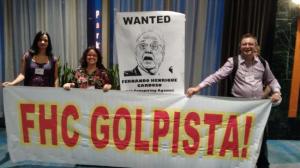
Protests at LASA led a former Brazilian president to withdraw.
fits the Brazilian situations is “to take over the government.” The process has hardly been sudden, the group launching it is not small, and it has not been carried out through violence. Many have implicitly recognized this by increasingly saying a “parliamentary coup.” In the political science literature, until recently, work on coups focused heavily on the military’s intervention in politics. There is an element of extra-legality: “At a minimum, therefore, the practice of coup d’etat is the technique of making exceptions from old rules and creating new rules of these exceptions,” one scholar wrote. More concretely, the end result is change of political regime and not only or even necessarily a change of political leader (Fujimori is the salient example). In Brazil, there was an attempt to scrupulously follow the letter of the old rules (if not the spirit) and the political regime remains the same as last week and last year.
History. The argument for historical equivalence is basically that democratic leftists are being forced from office by political and economic elites from the right. However, I think that equivalence does a disservice to the violence and repression that followed the 1964 coup in Brazil, the 1973 coups in Chile and Uruguay, and the 1976 coup in Argentina. This is linked to the point above, asking just how far we want to stretch important concepts like this one. The political-rhetorical point is exactly meant to emphasize this equivalence. We should first stop to ask just how equivalent the processes really are; otherwise, it can pave the way for those would like to minimize just how bad the repression of those periods was.
“Coups” in Latin America today. “Coups” and attempted coups seem to be rampant in Latin America today. Political competition, civil society opposition, corruption investigations, and many other political and judicial processes are being labelled coups. There are real reasons for concern about some of these events, but when there is outrage about the Brazilian impeachment but largely silence about Daniel Ortega’s consolidation of one-party rule in Nicaragua, there are reasons to question how the term is being applied. Likewise, the uncomfortable truth is that some of the political leaders decrying coup attempts were silent for far too long about the dramatic erosions of democracy, transparency, judicial independence, and rule of law in Venezuela. When a corruption investigation takes down Otto Pérez Molina in Guatemala, no one is crying “coup” – and with good reason. (Actually, Pérez Molina tried this, and no one bought it.) Many of parties of the center-left came to power promising to clean up corruption. Some of the PT’s early reforms set the stage for the investigations that followed. The seemingly reflexive tendency recently to call corruption investigations into leftist parties “coups” risks undermining the credibility of the broader, more important agenda of expanding political cooperation and pressing for greater redistribution in some of the world’s most unequal societies. For example, FMLN official in El Salvador have tried to derail necessary investigations by labeling them a coup. In the long run, that’s bad news for the left and for Latin American societies.
Political ramifications. OK, I get that most of the use of the term “coup” in Brazil is political and not analytical (though honestly I worry about academic debate on this subject at both LASA and SLAS). The question for those saying “coup” is not whether the term really holds as compared to prior usage, but about what the political effect is. But even in opposition to impeachment, I think the term is unhelpful. One simple reason is that “coup” may rally supporters, but it persuades no one and halts political dialogue. “Coup” paints a large part of the Brazilian population that said they would vote for impeachment (two-thirds in a recent survey) as part of the cabal and not part of the solution. “Coup” insists on the illegitimacy not just of the process but of the political system – a system in which the PT is now badly needed to serve as the leading political opposition. “Coup” does not help advance crucial political reforms – cubing the stunning levels of official immunity and impunity, changing campaign finance, more narrowly defining “crime of responsibility,” or reducing the plethora of parties, for example. Perhaps most worryingly, “coup” risks discrediting Brazil’s judicial institutions and the larger process of investigations that have uncovered dirty dealings well beyond the PT. For those who suspect that Temer and his supporters want to put the brakes on Lava Jato, crying “coup” at every turn could end up playing into the hands of those who would like to go back to business as usual, but with the PT as a more radical, but less electable minority party.
President Michel Temer, who appointed an all-white, all-male cabinet to represent a country where a majority identify as black, indigenous, or mixed. Half are also women.
None of this is to say that what happened this week in Brasilia was a a good thing. I don’t find much to celebrate. Turning impeachment into a no-confidence vote, even if following the letter of the law, has potentially destabilizing consequences. Dilma’s government has been replaced by a government no one seems to want, which seems unconcerned about representing Brazil’s diverse society, and which is dogged by corruption issues as serious as the PT’s. No one gives the Brazilian Senate high marks for moral probity, but ultimately it is as irrelevant as it is unpalatable. The source of the Senate’s authority in the process was constitutional, not moral. An impeachment is essentially a political process more than it is a judicial one. There were almost certainly deals made to ensure votes. The question is less about the individuals who occupy these positions, and more about the institutions are in place (and effectively practiced). Those institutions guided a process that many see as deeply flawed. No coup overturned them this week. Crying coup is unlikely to improve them.
I woke up to a welcome email from my former Dean at American University, letting me know that Latin America Confronts the United States had received a capsule review in Foreign Affairs. It is, fittingly in my opinion, featured alongside Joseph Tulchin’s recent Latin America in International Politics: Challenging U.S. Hegemony. Richard Feinberg notes that, “Both authors demonstrate that in fact, when dealing with the United States, capable Latin American leaders have not only successfully defended their interests but also astutely intervened in U.S. domestic politics to alter the way that Washington defines and pursues its interests in the region.”
You can see the rest of the brief review by Richard Feinberg in Foreign Affairs.
I also had recent reviews from Oliver Stuenkel on Post-Western World and Greg Weeks on Two Weeks Notice. Thanks so much to all of them for taking the time to read and share their thoughts.
Before I head off to Rio, I have a couple upcoming TV interviews tonight to discuss how this year’s Games are embroiled in Brazil’s own economic and political situations, as well as how Brazil’s neighbors are responding. First, I’ll be live on Canadian TV at 4:40 EDT, or 9:40 p.m. in the UK. Right after that, I’ll hope over to France 24, 5:00 EDT, or 10 p.m.
Following up on my informal thoughts on Tim Kaine’s nomination, the good folks at the American University Center for Latin American and Latino Studies asked me to write a brief blog post on Kaine’s experience for the region and why the vice presidency might be a helpful perch for improving U.S. relations with the Americas.
“U.S. Presidential candidate Hillary Clinton’s vice-presidential nominee, Virginia Senator Tim Kaine, may help her politically in the November election, and his potential influence on U.S. policy toward Latin America could be extremely important over the long haul. Though Kaine’s Latin American experience likely was a secondary consideration in his selection, it is consistent with the role of the office of the vice president that has emerged during the Obama Administration as a center for serious policy initiatives in the Americas.”
 I will be joining the Oxford Latin America Centre’s weekly History seminar this Thursday (1 December) to present on my new and ongoing research on the recreation of the Inter-American order in the waning days of World War II. Details are here. The work has been supported by a grant from the British Academy, (soon) by the Truman Library Institute, and (later, for writing) by a University of Reading Research 2020 Fellowship.
 Eventually, we all comply with that particular policy. Castro indelibly shaped the lives of generations of his fellow citizens in Cuba, sometimes for better by instilling national pride, increasing national independence, and improving health, arts, and education; and often for worse, by hanging onto power for decades, repressing dissent, and pressing on with disastrous policies that maintained state control but impoverished the country. His is a life that historians will debate for a very long time.
 I finally found the interview I did with BBC 5 Live radio with Dotun Adebayo of “Up All Night.” I didn’t hear it air live, because the show really is “all night.” It aired around 4 a.m. in the UK! Anyhow, it is available now at the
 with exposing a system of monthly payments for legislative cooperation called the mensalão. Another investigation called Lava Jato, or Car Wash, exposed an even bigger web of kickbacks, bribes, and money being siphoned from the government and parastatal banks and enterprises. Many of the biggest names in Brazilian politics and industry were implicated; many began to turn on one another, unleashing a two-year stream of revelations, depositions, and surreptitiously taped phone calls. Meanwhile, Brazilian’s decade of impressive economic growth ground to a halt and then went into reverse. The combination produced a wave of indignation.
 expert on Brazilian law, so I won’t give a definite opinion on the legality of the charges or of Dilma’s guilt or innocence, but it is worth noting that this is a not a clear-cut category and reasonable people disagree about what would constitute such a crime. Dilma’s “crime” was essentially mishandling state accounts in a way that presented a rosier picture before she ran for re-election through a series of misclassified short-term loans. There was certainly a glut of spending before the elections – and I think some very poor macroeconomic and fiscal policy enacted. Previous presidents had played a similar fiscal shell game. Dilma also pulled a bit of a bait and switch, making pre-electoral promises and then changing direction after winning. But that’s closer politics-as-usual than the stuff of impeachment. Regardless of the exact nature of the “crime of responsibility,” few believe that is what led to Dilma’s downfall. Instead, public anger over economic conditions, widespread condemnation of a corrupt political class, and poor management of Brazil’s web of party systems created the climate. For the public, the impeachment was, in many ways, more of a no-confidence vote than a legal case. However, Brazil’s constitution does not provide for no-confidence votes.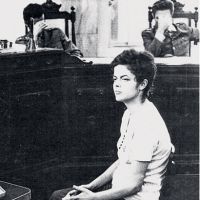

 I woke up to a welcome email from my former Dean at American University, letting me know that Latin America Confronts the United States had received a capsule review in Foreign Affairs. It is, fittingly in my opinion, featured alongside Joseph Tulchin’s recent Latin America in International Politics: Challenging U.S. Hegemony. Richard Feinberg notes that, “Both authors demonstrate that in fact, when dealing with the United States, capable Latin American leaders have not only successfully defended their interests but also astutely intervened in U.S. domestic politics to alter the way that Washington defines and pursues its interests in the region.”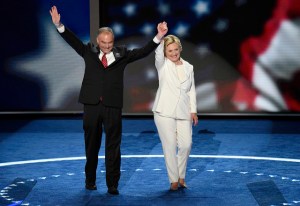
 Tom Long, PhD