The Non-Trade Trade

I have a new post on the Americas Quarterly blog that looks at a new documentary on prisoner transfers between the United States and Cuba, offering an historical comparison between a “non-trade trade” made during the Carter administration with the situations of Alan Gross and the remaining three members of the Cuban Five today.

Check out the documentary, produced by Soraya Castro of the University of Havana.

https://www.youtube.com/watch?v=gU8tNMbL5NY

Over at Americas Quarterly:

“At the beginning of President Barack Obama’s first term, moves toward normalization between the United States and Cuba briefly seemed possible. Restrictions on travel and remittances were loosened, and Obama hinted at bigger changes during the April 2009 Summit of the Americas in Trinidad and Tobago.

However, the political space in the United States quickly closed after USAID contractor Alan Gross was detained by Cuban authorities in late 2009. Meanwhile, the continued detention of three members of the “Cuban Five” since 1998 by the United States remained a major irritant for Cuba.”

Read the rest at Americas Quarterly.

The Great Crash

I’ve just finished reading John Kenneth Galbraith’s The Great Crash. While I had long been aware of the book, somehow I had managed to miss actually reading it. With the exception of some cringe-inducing gender references, much of the book continues to be relevant. This is true of of Galbraith’s main message regarding what makes people prone to speculation and regarding many of his colorful asides.

Galbraith lays out five reasons for the Crash and the ensuing severity of the Depression, pointing to fundamental economic weaknesses. First, he points to “the bad distribution of income.” The question of inequality, obviously, is once again central today, as Janet Yellen’s comments indicate. Second, to bad corporate structures, particularly shaky holding companies and investment trusts. Third, “the bad banking structure.” Fourth, “the dubious state of the foreign balance,” which in this case was a large U.S. surplus that was draining Europe of its gold reserves. Finally, Galbraith mentions “the poor state of economic intelligence,” on which there have certainly been improvements, though evidence could be found of continued pretensions of omniscience.


The Great Crash Credit: WikiMedia Common

“The fact that no business is transacted at a no-business meeting is normally not a serious cause for embarrassment to those attending. Numerous formulas have been devised to prevent discomfort. Thus scholars, who are great devotees of the no-business meeting, rely heavily on the exchange-of-ideas justification. To them the exchange of ideas is an absolute good. Any meeting at which ideas are exchanged is, therefore, useful. This justification is nearly ironclad. It is very hard to have a meeting of which it can be said that no ideas were exchanged.” …

“The no-business meetings of the great business executives depend for their illusion of importance on something quite different. Not the exchange of ideas or the spiritual rewards of comradeship, but a solemn sense of the assembled power gives significance to this assemblage. Even though nothing of importance is said or done, men of importance cannot meet without the occasion seeming important.” (144-145)

This reminds me of the frequent admonition of my late mentor Bob Pastor, who often pointed out to bureaucrats that they were measuring accomplishments by the numbers of meetings held and the presence of important people at those meetings. Meetings are a poor substitute for actions.

John Kenneth Galbraith, The Great Crash, (Boston: Houghton Mifflin Co., 1961 [1954])


H-Diplo Review: Putting the Canal on the Map

Andrew Kirkendall, a professor of History at Texas A&M, has just reviewed my April 2014 article “Putting the Canal on the Map” for the H-Diplo listserv. (PDF here.) I will self-servingly start with Dr. Kirkendall’s exceptionally kind introduction.

“It is not often that a journal article arrives in a scholar’s mail on a Monday, is read on Tuesday, and has its findings incorporated into a lecture on Wednesday. But it says something about my admiration for what Tom Long has accomplished here that this
was the case in my spring course on the history of inter-American relations.”

Wow! I think this might say more about Dr. Kirkendall’s dedication to keeping up with the literature and updating his syllabus than it does about my accomplisment, but I appreciate it nonetheless. Dr. Kirkendall does an excellent job of summarizing my piece. Even better, he follows up with some strong questions regarding on the question of agenda-setting, on the historical contingency of the mid-1970s, and generally about the ability of small states to effectively pursue their goals. Some of these questions I address a bit more in a longer chapter on Panama, which will be part of a forthcoming book. However, Dr. Kirkendall has given me more to think about while I work on revisions of that chapter, as well as on some theoretical pieces on small states in world politics.

The original article in Diplomatic History is available online.

ISA 2015

It’s the most magical day of the year for IR scholars…the release of the preliminary program for the ISA Annual Conference! Thanks to the many section chairs who devoted countless hours to reading abstracts–and thanks especially for choosing me to chair a panel on Brazilian diplomacy and present a paper on small states’ foreign policies. (I have diverse interests, I suppose.) I am really glad to see a panel dedicated specifically to small states’ foreign policies.

Here’s the abstract for my paper, “Small states, great power?”

In recent years, IR scholars have devoted increased attention to the agency of small states in International Relations. Some have argued that a “foreign policy power” approach is needed to reveal the important roles that small states play, often in bilateral or subregional affairs. How do small states seek to exploit opportunities and manage constraints? This paper addresses that question by offering analytical categories of small state foreign policy power. Synthesizing evidence from an extensive review of the literature on small states, often focused on single countries, I develop a more cohesive foreign policy power approach for small states. In particular, I argue that small-state foreign policy power can be best understood as originating in three categories of capabilities. These can usually be grouped as “derivative,” collective, and particularistic. Derivative power, described by Michael Handel, relies upon the dominant power for their effectiveness. Collective power involves building coalitions of supportive states apart from the great power. Particularistic power relies on the inherent assets of the small state trying to do the influencing. These categories set the stage for future research into the conditions under which small states are most likely to achieve influence.

New position: CIDE-DEI, Mexico City

I am very excited to be joining the Departamento de Estudios Internacionales at the Centro de Investigación y Docencia Económicas in Mexico City. I will be a visiting research professor for the 2014-2015 academic year.

Those who study Latin America will certainly know CIDE. For those who do not, it is perhaps Mexico’s top research institution for the political science, IR, and economics. CIDE has a small (but highly regarded) student body and a faculty of Mexican and international scholars with very strong reputations. I am grateful for the opportunity to work with them as I pursue a number of different research projects. I have the great luxury of dedicating the fall semester entirely to research and writing. I will likely be teaching one course in the spring semester (TBD).

On tap for the next semester…

  • Revising my book manuscript, currently under review at a great university press-to-be-named-later
  • Wrapping up an R&R at ISQ on the influence of small states in world politics
  • Completing a project on the NAFTA negotiations with the Mexico Institute at the Woodrow Wilson International Center for Scholars
  • Finishing a draft article on small-state foreign policy power
  • Starting a new research project on Mexican and Brazilian foreign policy, regional organizations, and global order

Panama’s UNSC Strategy

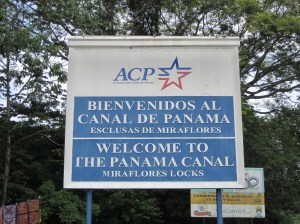
In the newest volume of Diplomatic History, I argue that Panama effectively used its temporary seat on the UN Security Council in 1974 to reshape the international agenda and reframe the U.S. and world perception of the Panama Canal negotiations. The article is called “Putting the Canal on the Map: Panamanian Agenda-setting and the 1973 Security Council Meetings.”

See the article here (sPanama Canalubscription required, so you might want to try through your library).

The abstract follows.

In the early 1970s, Panama’s negotiations with the United States over the status of the Panama Canal ground to a standstill. General Omar Torrijos had rejected treaties left unratified by previous governments only to receive a less generous offer from the Nixon administration. Realizing that the talks were being ignored in Washington, the Panamanian government worked to internationalize the previously bilateral issue, creating and exploiting a high-profile forum: Extraordinary meetings of the UN Security Council in March 1973 held in Panama City. In those meetings, Panama isolated the United States in order to raise the issue’s profile and amplify the costs of leaving the matter unsettled. Using underutilized Panamanian sources, this article examines that meeting, the succeeding progress, and the effect of this early stage on the final negotiations several years later. The case also illustrates how, during the unsettled international environment of the 1970s, a small state utilized international organizations to obtain attention and support for its most important cause.

Losing a hero

P1030055

Last night, I lost a man who has been my teacher, mentor, colleague, and friend. Robert Pastor has been an indefatigable force for democracy, human rights, justice, and peace in U.S. policy, in Latin America, the Middle East, and beyond. He has been a tremendous teacher to thousands. His scholarship has influenced many more.

I have had the privilege of working with him for nearly six years. For almost four, he has battled advanced cancer with amazing strength, perseverance, and good humor. He continued to work, accomplishing tremendous things despite his illness. Knowing his time was short, he invested an incredible amount of time and energy in me–in my learning, research, career, and personal development. He was more than my mentor, he was my hero. I miss him terribly.

Fall semester teaching

This fall I am excited to be teaching two courses. First, I will be teaching an upper-level seminar on “International and Foreign Policy Studies” at the Washington Internship Institute. We will examine the U.S. policy process, the U.S. role in the world, and the issues that face policymakers today. The semester-long National Security Council simulation will press students to examine and eventually craft policy regarding the U.S. response to the ongoing political crisis in Egypt.

Secondly, I will be teaching a course on global governance in the American University online M.A. program, along with Professor David Bosco. We will be covering the waterfront of international actors active in global governance and looking at a host of challenges that demand global cooperation. I’m excited to be teaching with David, who is truly one of the top scholars working on the UN, ICC, and ICJ.

I had a great time teaching this summer in American University’s Community of Scholars program. It was my third year teaching “Diplomacy and Dictators: U.S. Foreign Policy in an Uncertain World.” I was lucky to work with 24 very bright and hard-working students, as we grappled with how the United States has and should deal with the emergence of China as a possible competitor.

PhD for hire

I am interested in teaching as an adjunct in the Washington, D.C. area during the Spring 2014 term.

I am currently teaching courses on U.S. foreign policy and on global governance. My own research has focused on inter-American relations, and Latin American politics, and I would greatly enjoy the opportunity to teach a class in those subjects. I would also be interested in teaching introductory IR theory or qualitative research design.

You can find a link to my CV above. Please see my Teaching page for links to evaluations and a sample syllabus.

Dissertation defended

Approximately 1,750 days after starting the Ph.D. program at American University, I am happy to say I made it through.

Exiting my defenseDespite the many horror stories recounted by graduate students everywhere, I really enjoyed the vast majority of those days, in which I had the freedom to dedicate much of my time to learning, reading, writing, and sharing ideas with brilliant people. I am grateful for having had this extraordinary privilege. Most of all, I enjoyed it because of the people who accompanied me along the way.

Thank you, first of all to my parents, Tim and Jan Long for their support and love. Thanks to Marta, who was there every step of the way. Thanks to Dr. Robert Pastor, who has been an intellectual and personal mentor. Thanks to Professors Friedman, Atzili, Brenner, Goodman, Weiner, Silvia, Cohn, Tama, and more. Thanks to the two deans of SIS during my time here, Louis Goodman and Jim Goldgeier. I am grateful for the financial and institutional support I received from American University. It was a great place to pursue my studies.

Thanks to my colleagues and close friends in the SIS PhD program. I’m hesitant to add names at the risk of missing anyone amongst the many who have helped me out with their kindness, feedback on many drafts. But I must give my gratitude to Ryan Briggs, Daniel Dye, Sebastian Bitar, Kate Reese, Jason Rancatore, Tazreena Sajjad, Anders Härdig who have journeyed alongside (and ahead of) me. Thank you to the friends I made in USFP, who made this so much more fun–Mariah, Eren, Cannonball, Heather, Kaitie, and many others. Finally, thank you to the friends I made during my travels abroad. All of you (including many I didn’t specifically list) helped make this long process much richer.

Thanks!

Tom

PS – This means I am very much on the job market…