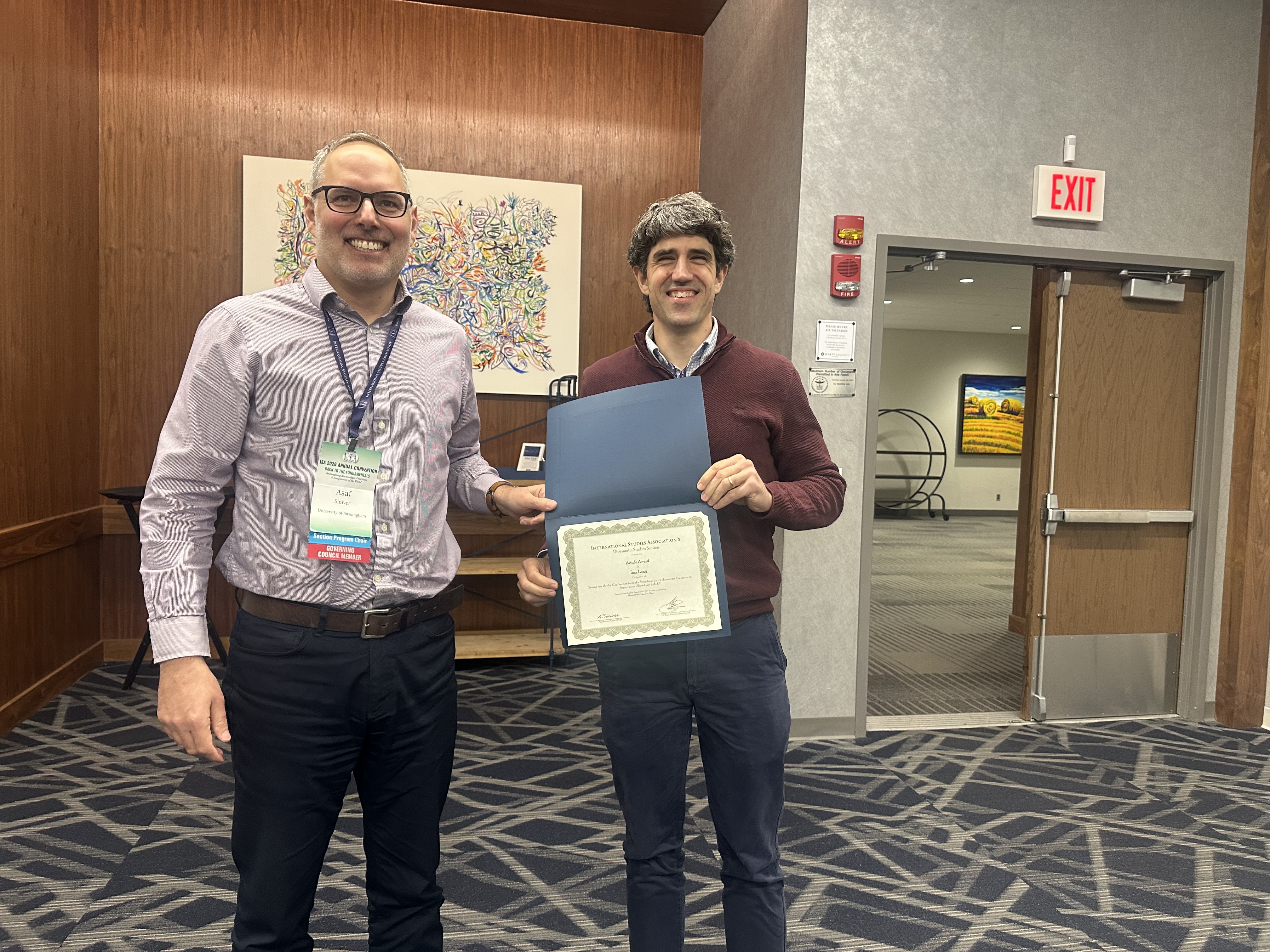
I’m truly honored to have been awarded the 2026 Best Article prize by the Diplomatic Studies Section of the International Studies Association (ISA) for the article “Seeing the Berlin Conference from the periphery: Latin American reactions to imperialism elsewhere, 1884–85. The piece was published in the Journal of Global History and co-authored with Carsten-Andreas Schulz of Cambridge. The article is available open access. A huge thanks to the committee for taking the time to engage with our work and for selecting us for this honor, and to section president Asaf Siniver of Birmingham University (pictured) for presenting it at the ISA Conference on March 23, 2026. Sadly, Carsten couldn’t make it to the conference in Columbus!
The article explores the role and reaction of Latin America to the infamous Berlin colonial conference of 1884-25. That meeting has been widely studied for its role in fuelling European imperialism and legitimising the scramble for Africa. However, its global impact beyond Europe and Africa has received little attention, with Latin America notably absent. The article examines how prominent diplomats from Argentina, Brazil, Colombia, and Mexico interpreted the proceedings. In their view, Europe’s renewed expansionism in Africa—combining private adventurism, colonisation enterprises, and imperial statecraft—resembled the great powers’ incursions into post-independence Latin America.
These Latin American diplomatics feared that new criteria for staking colonial claims would endanger their states’ sovereignty over vast, remote territories. Yet, while opposing intervention, these diplomats embraced civilizational thinking and state-building projects that echoed Eurocentric racial hierarchies. Their arguments reflected both resistance to imperialism and complicity in its logic. By tracing Berlin’s reverberations across multiple regions, this article highlights the broader repercussions of late nineteenth-century ‘high imperialism’ and reassesses the nature of Latin American anti-imperialism.
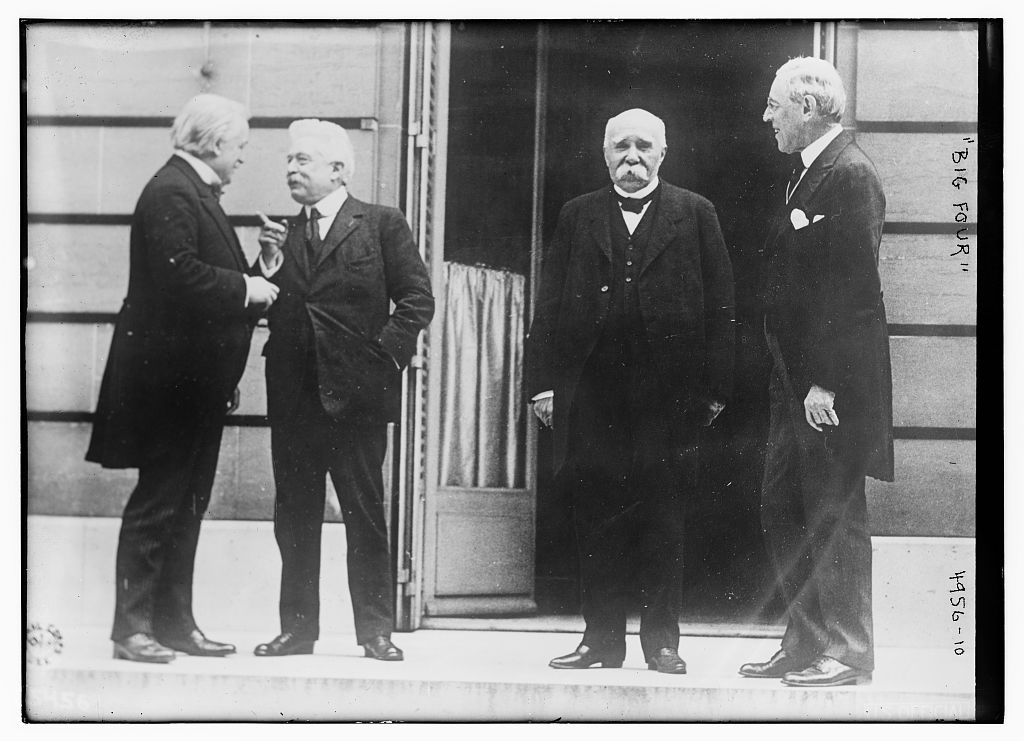
The prerogatives of the UN Security Council’s ‘Permanent Five’ have long drawn the ire of states excluded from this exclusive council. However, the United Nations was not the first international body to embody this sort of ‘sovereign inequality’ in its core institutional design. Instead, this architecture originated with the League of Nations’ division of a powerful, narrow council from a weaker, but universal, assembly. But where did that design originate?
In arriving to the ultimate design between 1915 and 1919, the League’s architects consistently invoked a particular negative antecedent to justify their positions: Latin America’s stubborn insistence on sovereign equality at the 1907 Second Hague Conference. Although this meeting is often highlighted as a heroic moment in Latin American diplomatic history, European and U.S. counterparts largely did not see it that way. Eyre Crowe, the British delegation’s first secretary, seethed that “The South Americans have made themselves supremely ridiculous by speechifying in and out of season in the name of the equality of all nations.”
In the midst of World War I, Crowe and others looked towards the postwar order. Their institutional solution permitted universal participation and a cursory nod to juridical equality while embedding an institutionalized hierarchy that preserved great power privilege.
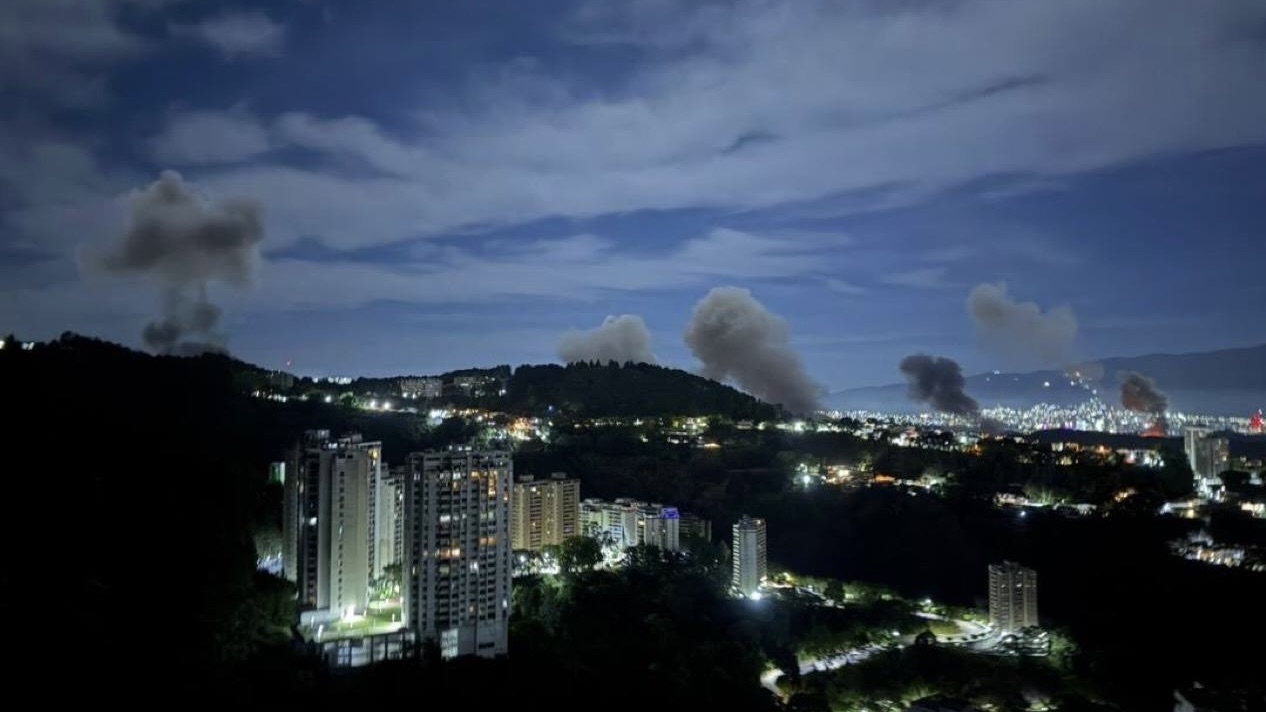
The new year got off to a shocking start, with US bombs falling on Caracas and the de facto president Nicolás Maduro being abducted. He soon reappeared in a Brooklyn jail. I was just across the river in Manhattan, which somehow made it all seem even more surreal.
The spectacle of it all–its made-for-TV, Jack Ryan-quality–was doubtlessly part of what made the operation attractive to Trump. That it was in operational terms a resounding success has dampened criticism. Even the anti-forever war part of the Trump coalition tends to be reverent of, and wowed by, the sophisticated capabilities of the US military at first. Criticism elsewhere in Latin America has also been muted by that factor and by fears of falling afoul of an unmoored U.S. unilateralism. However, the region’s responses have been tepid, perhaps especially, because Maduro was a deeply despised figure. The consequences of late-stage chavista rule in Venezuela have scrambled politics in Central and South America. Early polls suggested that intervention was pretty popular among the broader public in much of South America. Maduro was blamed for Venezuelan emigration (in large part correctly); those migrants were often blamed for insecurity (typically an exaggeration). Meanwhile, incumbents scramble to avoid being next, prompting unusual caution from Colombia’s Gustavo Petro and a delicate balancing act from Mexico’s Claudia Sheinbaum.
And yet, like most interventions, I do not think this one is likely to age well. I wrote an article in Foreign Policy discussing the historical parallels, written with Carsten-Andreas Schulz. Echoes of US interventions a century ago, we argue, suggest that the idea of “running” Venezuela from offshore will quickly become fraught. Marco Rubio’s appearance on Capitol Hill suggested as much, again making demands and levelling threats.
I also participated in a panel organized by the European International Studies Association, “After Venezuela: Regional and Global Consequences of U.S. Intervention.” Reflecting the unstinting pace of the news cycle, much of the discussion had already shifted to threats against Greenland and the consequences for NATO.
There’s a great deal more to say about this intervention and its consequences. The attack was an evident violation of international law and affront to the UN Charter. There’s been a lot of discussion of this, although I’m not sure to what end. The Trump administration–unlike in the 2003 invasion of Iraq–barely made an effort to cook up international legal justifications. Instead, they appealed to the extra-territorial enforcement of US law. The US has done this in some ways (sanctions, prosecutions) for a long time, but the idea that the enforcement of US law justifies the US of military force is quite different. (In some respects, the 1989 invasion of Panama and arrest of Manuel Noriega shared this notion, but there was also an argument made about democracy, human rights, etc.)
Few tears will be shed for Nicolás Maduro. The justifications offered for his removal (the quasi-fictional ‘Cartel de los Soles’) are dubious, but Maduro was an autocrat who presided over the impoverishment of his people and the destruction of democracy through violent repression and stunning corruption. But the regime that he helped consolidate essentially remains in place. There’s little evidence so far that the intervention will materially improve conditions for people in Venezuela. Indeed, it’s quite clear that this wasn’t the point. If anyone had any doubt, then the Trump administration’s removal of protected status for Venezuelan migrants and attempts to dramatically escalate non-criminal deportations to a country in crisis should make that clear. This creates quite a political challenge for the Venezuelan opposition, like Maria Corina Machado, who have cozied up to Trump during the past year and since the intervention.
What was the point, then? What drove this decision? On the one hand, Trump’s own declarations make it seem obvious: it was about the oil. That explanation has proved popular with those who see the intervention as nothing more than a continuation of resource imperialism, now with the mask off.
I don’t think this is an adequate explanation, however. Maduro was eager to make a deal on oil, if it kept him in power. The problem was that making such a deal with Maduro was unacceptable to a slice of Trump’s coalition, especially Cuban and Venezuelan exiles centered around Marco Rubio. The pressure on Cuba, then, was a central goal. Trump’s idea of cashing in on these oil fields clashes with limited interest from major oil companies in sinking major investments there. For others, like Stephen Miller, forcing Venezuela to accept more deportees was the point. At least at first glance, the intervention gave something to many elements of the Trump coalition. But with the rest of the regime in place, little prospect of aid, and no respite for Venezuelan migrants, what it has given to the people of that country is far from evident.
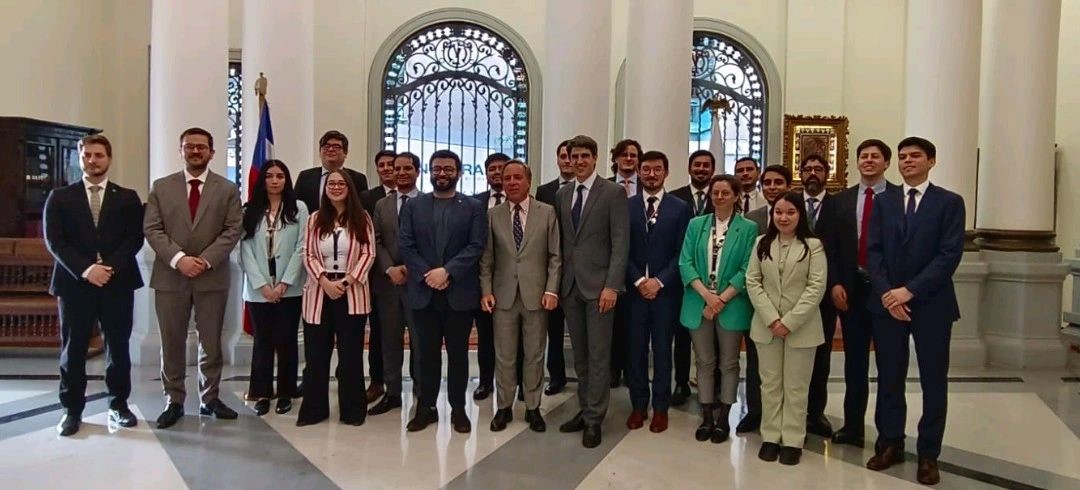
Belatedly, I wanted to post a few remarks on my visit to Chile from October 12-18. I went to Santiago at the invitation of colleagues at the Instituto de Estudios Internacionales at the University of Chile, especially Federico Rojas and my former PhD student Cristóbal Bywaters. It was my first time back in Santiago since spending nearly four months there on a Fulbright visiting professorship in mid-2018. It was tremendous to be back in this great city, to see old friends, and to build new connections with scholars, diplomats, and students.
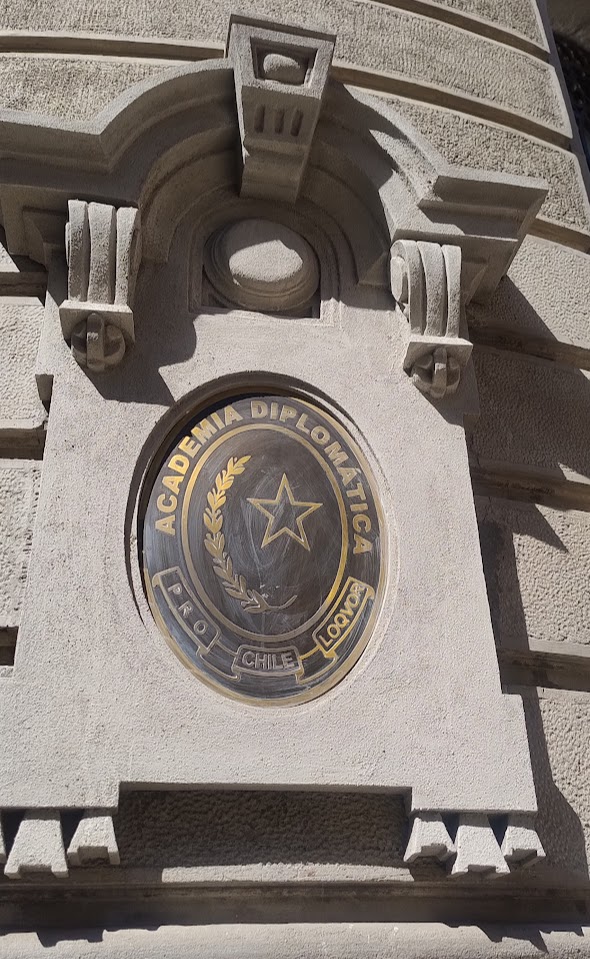
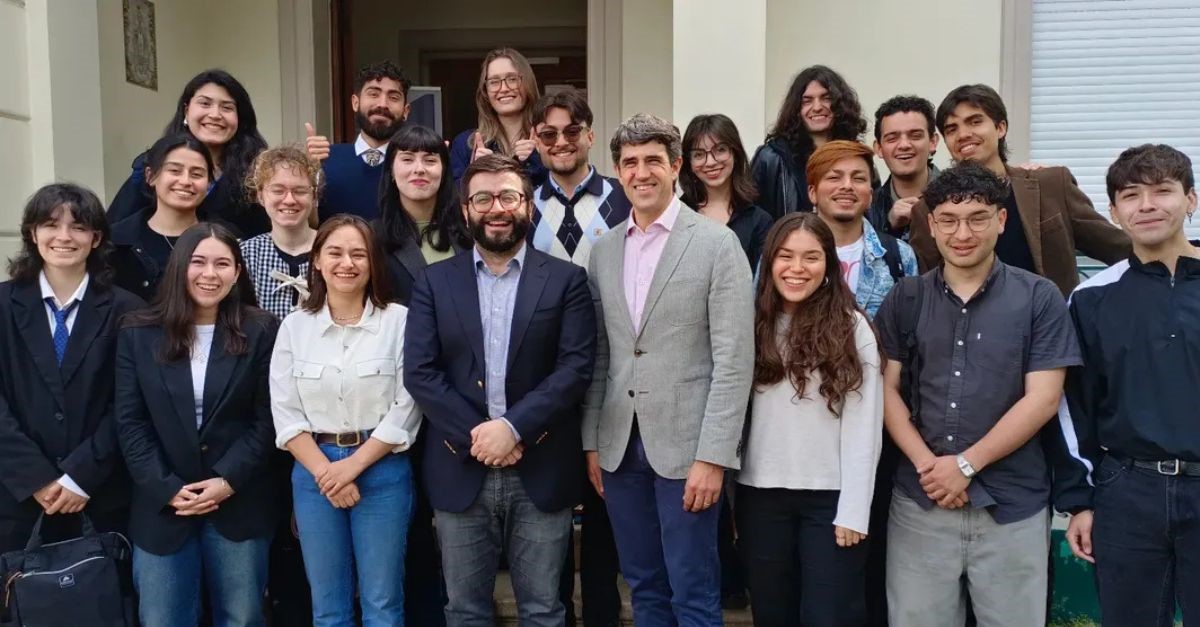
During the week-long visit, I had a busy agenda, with a number of talks and sessions, as well as a couple of days in the Chilean foreign ministry archives. On Monday, I visited the IEI and met with with colleagues there and toured the facilities. Later that day, I had the great privilege of presenting my book, A Small State’s Guide to World Politics, at the Chilean Diplomatic Academy. Many thanks to Director Ambassador Hernán Bascuñán and his team for the invitation, and especially to the students for their attention and excellent questions.
On Wednesday, I joined a fantastic group of students, who have created a discussion group on foreign policy analysis. We talked about Latin American and Chilean foreign policy, as well as small states in international politics.
In the afternoon, I presented at the department seminar, sharing work-in-progress on the design of the League of Nations. Finally, I gave a talk as part of the Regionalism Seminar Series, supported by the CAF Development Bank of Latin America. I talked about the challenges of sustaining regional cooperation and organization, with illustrations from Central America.
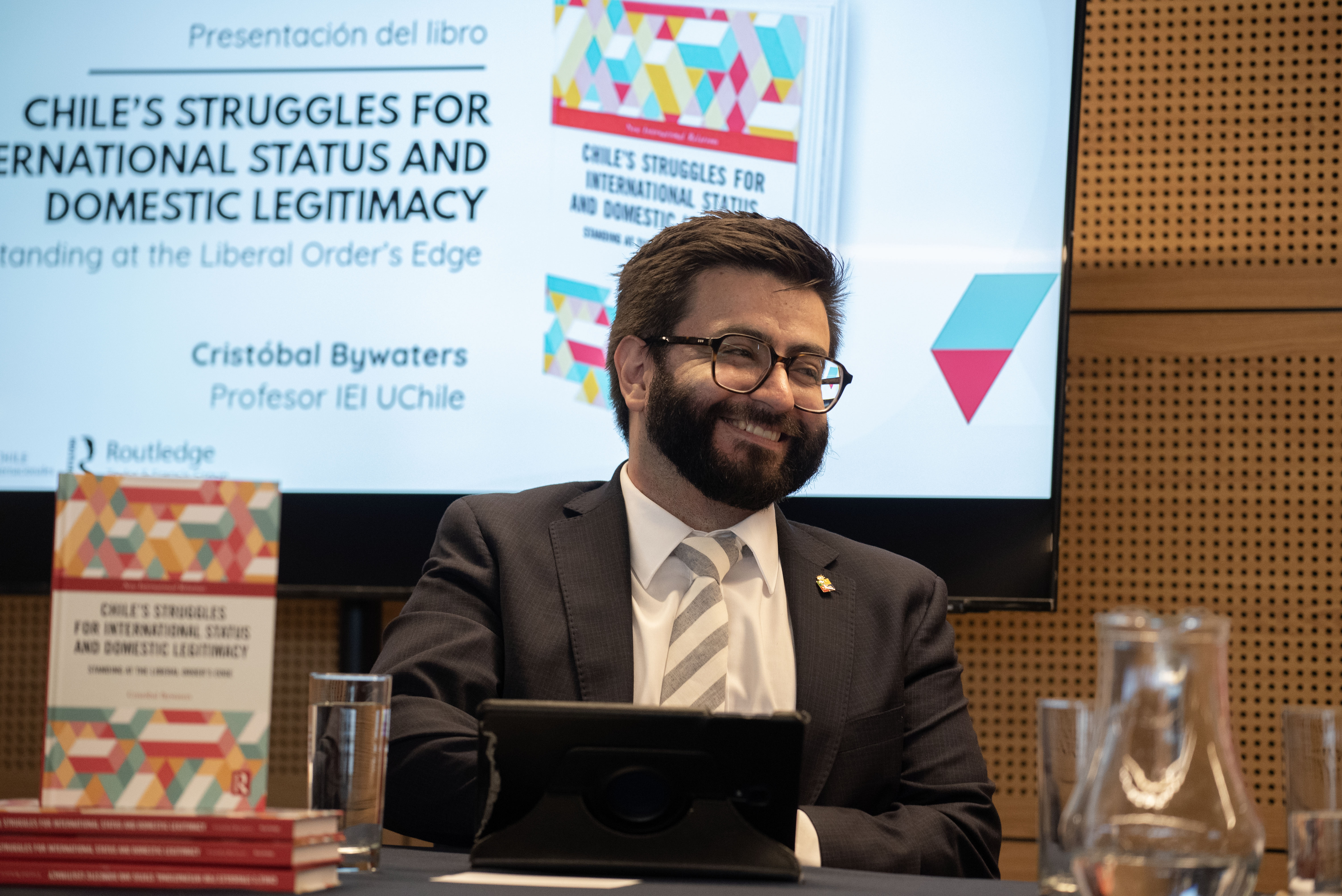
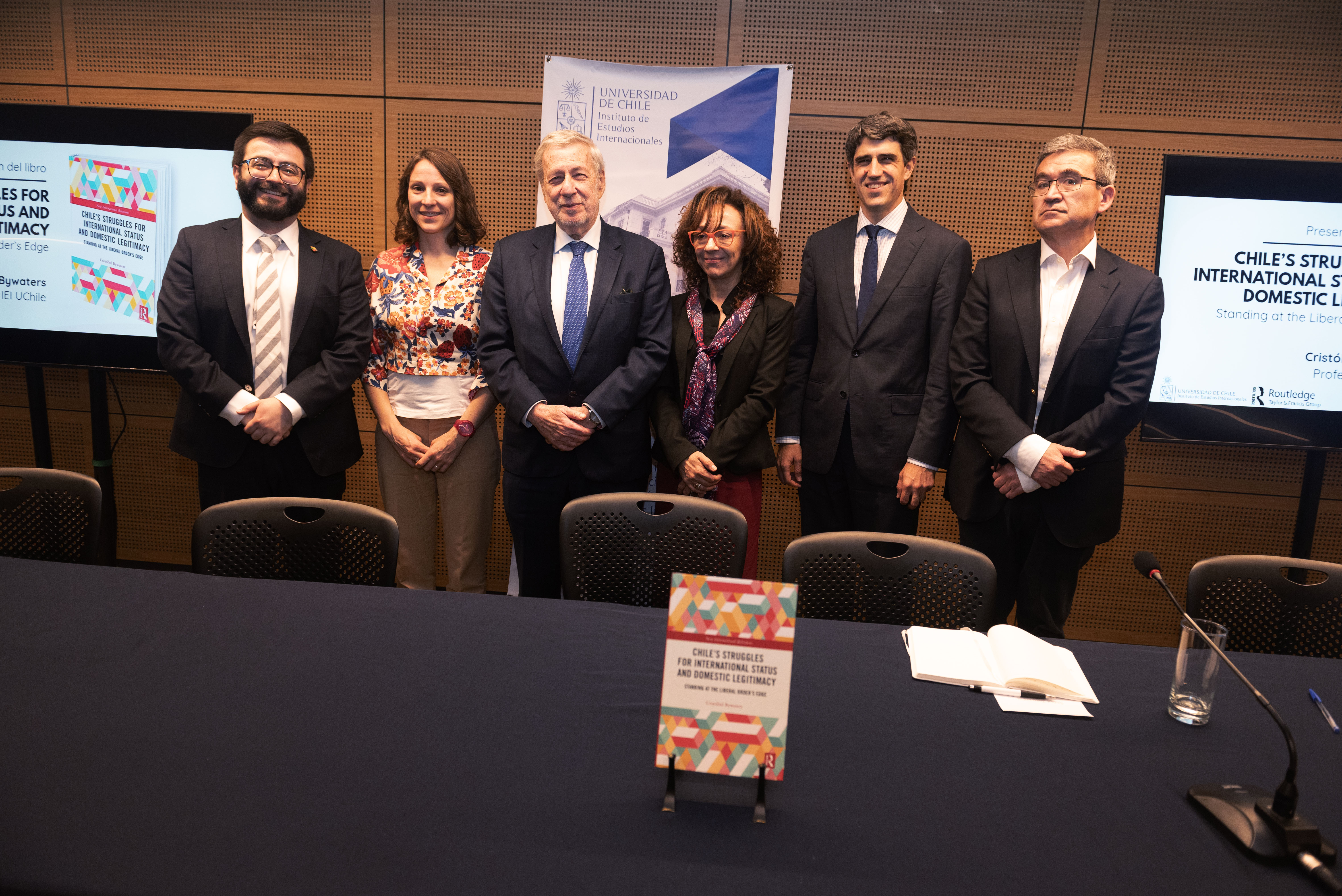
On Thursday evening, we had a real higlight, as Cristóbal presented his new book, Chile’s Struggles for International Status and Domestic Legitimacy Standing at the Liberal Order’s Edge. It was a real honor to see my student present the work that originated with his PhD thesis in front of a packed house, with a panel including Foreign Minister Alberto Van Klaveren, and an audience with other former ministers, ambassadors, and leading experts.
The 1884-85 Berlin Conference is one of the best known and most infamous examples of European imperialism and the “Scramble for Africa.” How did Latin American states, the world’s first collection of post colonial countries, respond?
Although no Latin American states were invited, their diplomats paid close attention and offered strong responses. Carlos Calvo, perhaps the region’s most famous lawyer of the period, managed to attend. Their arguments reflected both resistance to imperialism and complicity in its logic. By tracing Berlin’s reverberations across multiple regions, we highlight the broader repercussions of late nineteenth-century ‘high imperialism’ and reassesses the nature of Latin American anti-imperialism.
On the one hand, Colombian diplomat Ricardo Becerra proposed a counter-conference to reject the principles advanced at Berlin. Scandalized by the proceedings and by the application of Berlin’s new colonial doctrines in the Pacific, he wrote: “If these are the notions of justice and international morality of the most enlightened statesmen of Europe, well-justified is the fear that tomorrow, when the Panama Canal opens, for example, that the same Germany or another power would apply to our deserted coasts of the Darien the doctrine subscribed in Berlin and already practiced with respect to the Carolines.” Brazil’s diplomat in Berlin expressed similar fears that the South American country might find itself victimized by imperial expansion.
On the other hand, the famous Carlos Calvo managed to attend the conference, drawing on his reputation in international law. Once there, he defended not the rights of Africans but those of Portugal’s traditional claims. Argentina, Brazil, and Mexico soon recognized King Leopold II’s Congo Free State, in an episode seemingly overlooked in the historiography.
The article is part of our AHRC-funded project on Latin America and the making of international order in the late nineteenth century. It draws on archival research in Argentina, Brazil, Chile, Colombia, and Mexico, as well as documents from France, Germany, the UK, and the US.
Seeing the Berlin Conference from the periphery: Latin American reactions to imperialism elsewhere, 1884–85
Abstract: The Berlin Conference (1884–85) is widely studied for its role in fuelling European imperialism and legitimising the scramble for Africa. However, its global impact beyond Europe and Africa has received little attention, with Latin America notably absent. This article examines how prominent diplomats from Argentina, Brazil, Colombia, and Mexico interpreted the proceedings. In their view, Europe’s renewed expansionism in Africa—combining private adventurism, colonisation enterprises, and imperial statecraft—resembled the great powers’ incursions into post-independence Latin America. They feared that new criteria for staking colonial claims would endanger their states’ sovereignty over vast, remote territories. Yet, while opposing intervention, these diplomats embraced civilisational thinking and state-building projects that echoed Eurocentric racial hierarchies. Their arguments reflected both resistance to imperialism and complicity in its logic. By tracing Berlin’s reverberations across multiple regions, this article highlights the broader repercussions of late nineteenth-century ‘high imperialism’ and reassesses the nature of Latin American anti-imperialism.
Happy holidays! It has been a busy year professionally and personally; given my recurring failure to write Christmas cards or a holiday letter, ever, I will share here a few highlights from 2024 and hopes/plans for 2025.
In the major bit of professional news this year, I was promoted to Professor at the University of Warwick’s Department of Politics and International Studies. Coming after seven years at Warwick, it was a great honor to receive this recognition from my colleagues and the university. I do miss the confusion caused by telling my US-based counterparts that I was a “Reader” of International Relations…but it simplifies the matter of translating my title quite a bit.
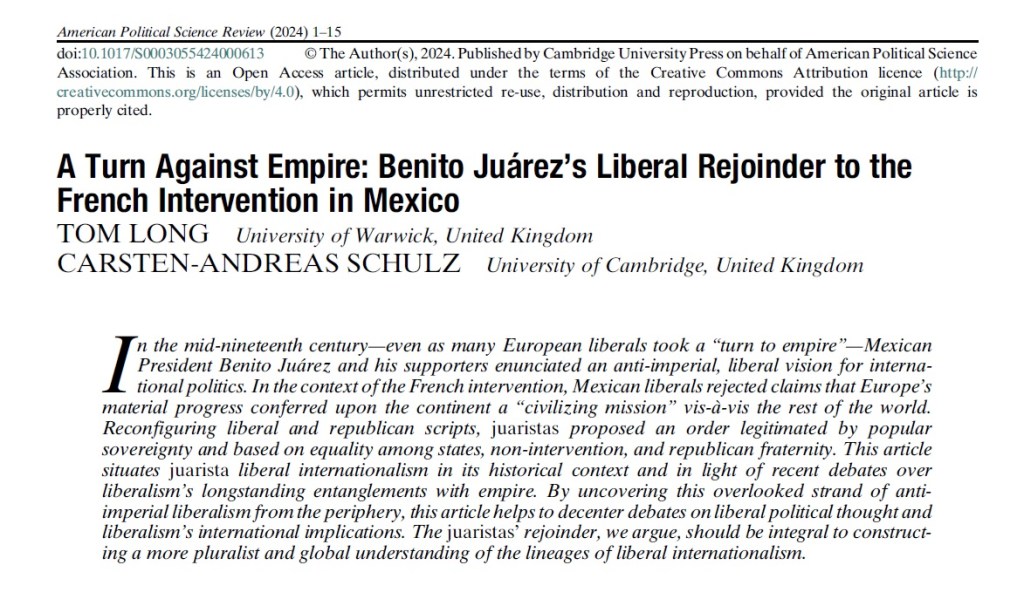
In terms of publications, it was great to see the efforts of several collaborations make their way through the long process of research, (re)writing, peer-review, and editing. I spent most of the year working collaboratively, and that has been a pleasure. Most of the things that came out in 2024 were years in the making. Several are products of my ongoing AHRC-funded research with Carsten-Andreas Schulz on Latin America and the formation of international order. The biggest highlight was making my debut in the flagship journal for political science, the American Political Science Review, with an examination of how Mexican Liberals shaped their own anti-imperial liberal internationalism in response to the French Intervention (1861-67).
In addition to those pieces with Carsten, I returned to collaborating with American University PhD alum and friend Sebastián Bitar, and finally saw a piece published with Warwick historian and my running partner Benjamin T. Smith. Ben and I first started discussing that paper while jogging down the canal paths during our government-approved pandemic exercise hour. That it came out in top-shelf history journal Past & Present was icing on the cake. Finally, a translated edition of an collaborative volume with Eric Hershberg was published in Spanish with El Colegio de México. That really served as the culmination of the Robert A. Pastor North American Research Initiative, which I’d chaired for about eight years. Given the more intense interest in North America in Mexico, we were very pleased to see this come to fruition with a prominent Mexican press. (The English version was published by University of New Mexico Press in December 2023.) Visual round-up below, and links after that.
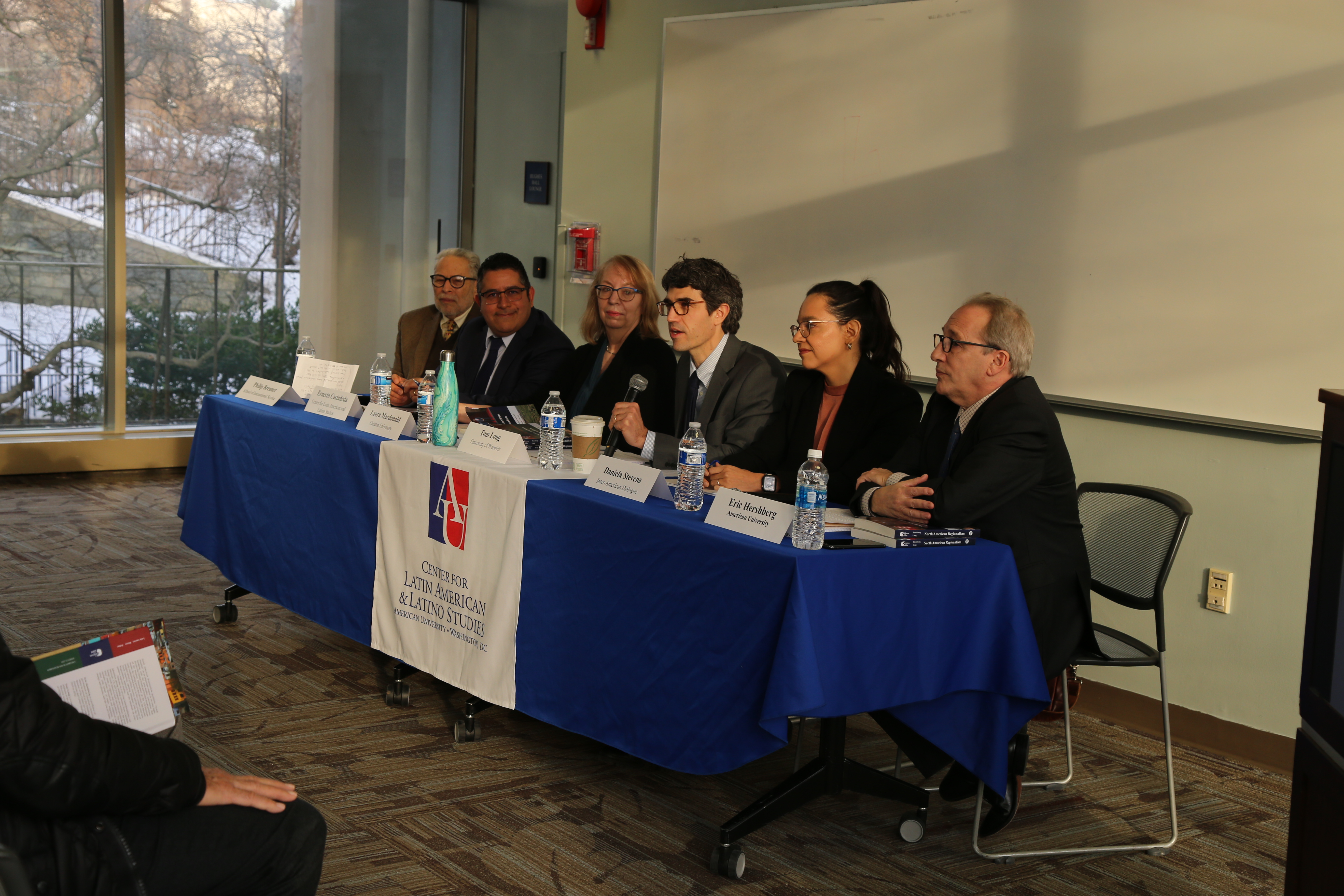
In addition to writing and teaching, I was lucky to visit and meet colleagues from the UK, Europe, and across the Americas to share work and swap ideas. I started 2024 with a trip back to my alma mater, American University, for the presentation of our book, North America Regionalism. It was also a fitting and moving tribute to our friend and my PhD supervisor, Robert Pastor, ten years after his passing.
In April, I visited San Francisco for the annual International Studies Association conference, always a wonderful opportunity to catch up with old friends, renew connections, and meet new and interesting folks. April was a busy month; Carsten and I also presented a new paper on the 1884-85 Berlin Conference and Latin America at the Oxford University Latin America Centre. I presented new iterations of that paper at the UK Latin American Historians Network meeting at Sheffield University and at a global diplomatic history workshop at Warwick in May.
Also in May, I caught the Eurostar through the channel tunnel for a trip to Paris, where I had the opportunity to make my first visit to the Maison de l’Amérique latine, discussing US relations with Latin America, in May. It was a great daylong discussion with largely French diplomats and scholars.
In July, I had the chance to get back to Buenos Aires for the first time since the pandemic. It’s one of my favorite cities anywhere, with tremendouse theater, arts, and literary scenes–not to mention some of the world’s most fascinating politics. I spent a lot of time trawling the foreign ministry archives, but I also had the chance to present my work in progress at FLACSO and to see brilliant friends and colleagues. After a break in Spain during August, it was back to teaching at Warwick for the fall term. Amidst that, I had the opportunity to join a postdoctoral development workshop at William & Mary in November, while also presenting Carsten and my book-in-progress at London’s Westminster University and at W&M in the same busy week.
Plans for 2025
The year to come promises to be a busy one, even as I try to focus on doing fewer but bigger projects. Carsten and I have a full joint agenda, starting with shepherding a few articles with R&Rs through the review process. We’re also working on getting a contract for our book-in-progress … hopefully news to come in the first months of 2025. And I’m also applying to an ERC Consolidator grant–always a long-shot but hopefully one worth taking.
I’m looking forward to making my first trip to Norway to meet colleagues at NUPI and present in their seminar series. There are many luminaries of historical International Relations there, as well as experts on small states, so it is a visit that I am really looking forward to.
In early March, I’ll be at the annual International Studies Association conference in Chicago. Carsten and I have co-organized a workshop and series of panels on how ideas and practices of international politics have moved from the Latin American region to the global level. We’re excited to be working with a diverse group of scholars on that theme. I will also be participating in roundtables on grand strategy and territorial conflict, and on liberalism beyond the west.
Hopefully, I’ll make it back to Mexico in April–I got sick and missed a long-awaited trip to Guadalajara in December. Plans for the second half of the year are still pretty much wide open…other than setting aside plenty of time for writing a book!
That’s my work-life year in review. Wishing you a very happy 2025!
Carsten-Andreas Schulz and I have an essay in the new issue of the Georgetown Journal of International Affairs. In it, we give a synthetic view of inter-American relations over the two centuries since Latin American independence. Against this historical backdrop, we focus on what changes within the hemispheric and at the global level will mean for U.S.-Latin American relations.
Article abstract
The two hundredth anniversary of the Monroe Doctrine provides an opportunity to make a somewhat contrarian point: U.S.-Latin American relations are not as unidirectional as commonly suggested. Though the international relations of the Americas have been characterized by the power disparity between the United States and its neighbors, it is misleading to imply that U.S. dominance equated to unilateral determination of inter-American relations since 1823. On one hand, the United States’ history of interventions, browbeating, and heavy-handedness is well known. Undoubtedly, asymmetry has played a significant role in shaping identities, interests, and designs of states in the Western Hemisphere. However, on the other hand, the disparity of power should not be understood as directly determining outcomes: the powerful state has not always prevailed; the weak have not always cowered. Instead, smaller states in the region have contested, cooperated, and co-constituted tin their relationships. In this piece, we aim to emphasize how Latin America has found spaces to pursue its interests in the interstices of asymmetry. Meanwhile, the United States has often fallen into an “insecurity dilemma,” exaggerating threats despite its position of much greater power and responding in ways that complicate cooperation.
It is time for a new U.S. approach: if Latin America is cast largely as a place from which ‘threats’ emerge instead of as a partner, the United States will alienate allies and struggle to build the security it desires.”
Cite: Tom Long and Carsten-Andreas Schulz. “In the Interstices of Asymmetry: Two Centuries of U.S.-Latin American Relations.” Georgetown Journal of International Affairs 25, no. 1 (2024): 132-143. https://dx.doi.org/10.1353/gia.2024.a934896.
On October 1, Mexico’s Andrés Manuel President López Obrador will finish a momentous six-year term. He will be handing over the National Palace to his handpicked successor, Claudia Sheinbaum. No one doubts that AMLO has been a transformative president. He upended Mexico’s political party system, dominated the media and the agenda, and yet left office with sky-high approval ratings. To his final days, he has also elicited strident critiques from those who see him as a threat to Mexico’s democratic and economic model.
In foreign affairs, however, AMLO’s transformative effects are less clear. He is oft-maligned as internationally ignorant, and even isolationist. He rarely travels abroad, and he made clear his focus would be at home. This has led, we think, to misinterpretations of the outgoing president’s worldview.
In a new article for Foreign Policy, Carsten-Andreas Schulz and I argue that AMLO’s legacy is better understood as an attempt to revive the republican internationalism of his hero Benito Juárez. We draw on our recent article in the American Political Science Review, “A Turn Against Empire: Benito Juárez’s Liberal Rejoinder to the French Intervention in Mexico.”
Carsten-Andreas Schulz and my article on the liberal internationalism of Mexico’s Benito Juárez is out in the American Political Science Review, the leading journal in the field. In our article, we describe how domestic political strife and international interventions in the 1860s shaped the juaristas’ republican vision of international order—one based on the rule of law, equality, and republican fraternity. Too often, both supporters and critiques see liberal internationalism as an essentially Anglo-American project, one associated with Woodrow Wilson and the aftermath of the two world wars. By digging into Mexican political thought decades earlier, we tell a new and more global intellectual history of liberal internationalisms, in the plural.
In the 1860s, Latin Americans faced a flurry of imperial incursions. These episodes coincided with European liberals embrace of imperialism to uplift supposedly “backwards” peoples—a phenomenon Jennifer Pitts termed the “turn to empire.” The French intervention in Mexico stands as one of the most pernicious examples, though certainly not the only one.
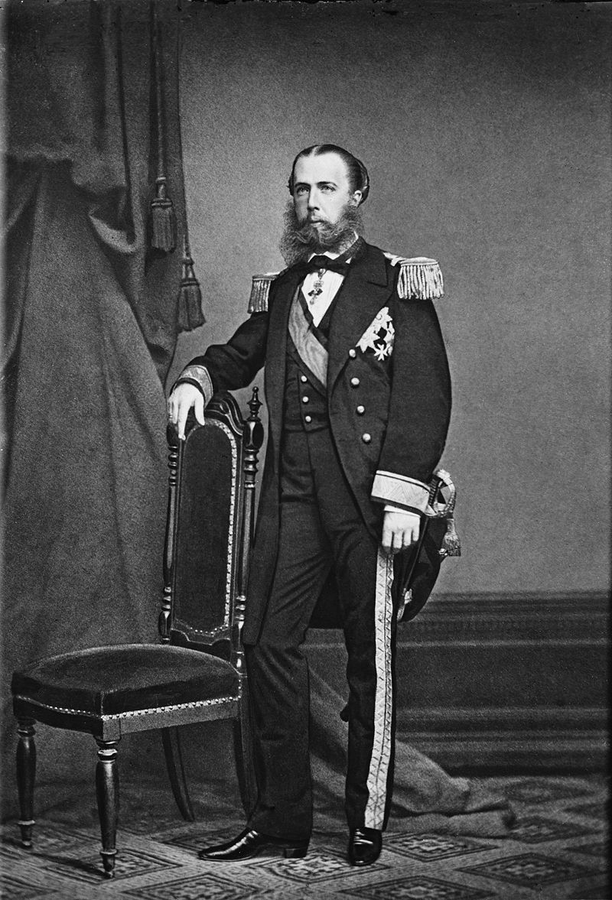
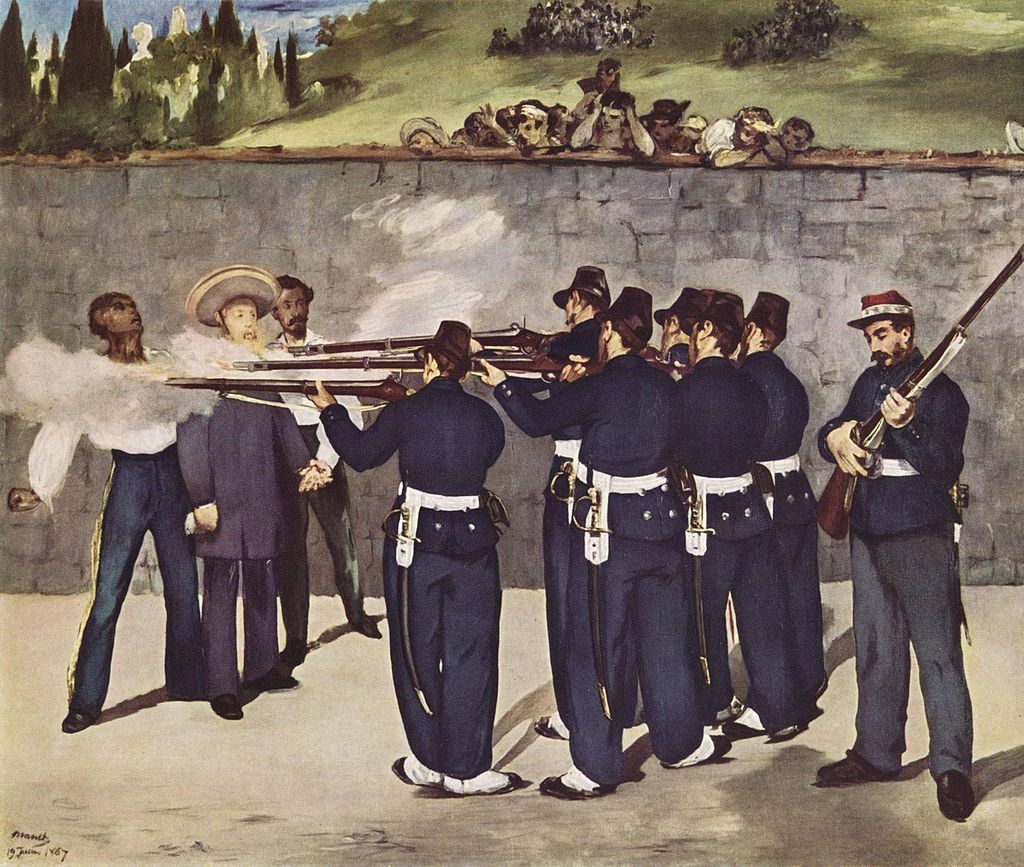
In Mexico, reforms had sparked a civil war between conservatives and liberals, led by Benito Juárez (below, right), a Zapotec orphan from Oaxaca. Juárez’s coalition emerged victorious but his government was deeply indebted, prompting a moratorium on foreign debt payments in 1861. This moratorium triggered an intervention by Britain, France, and Spain. While Britain and Spain soon withdrew, Napoleon III conspired with Juárez’s opponents to install a monarchy in Mexico, headed by Archduke Maximilian of Austria (below, left). Mexican liberals resisted a French army and Maximilian’s reign until 1867, when the Habsburg was captured, tried, and executed. The event inspired Manet’s famous (and long-censored) series of paintings, TheExecution of the Emperor Maximilian (at the bottom). An ardent republican, the painter uses the soldiers’ uniforms and perspective to blame Napoleon III and invite the viewer to accompany the firing squad.
In our article, we explore how Mexico’s juaristas enunciated their own ideals for the organization of world politics, and how this vision gained coherence in response to European liberals’ racialized discourse and their defense of intervention under the guise of advancing civilization. In doing so, we provide a novel account of the origins of Mexico’s (and Spanish America’s) distinct internationalist tradition, as well as an early liberal critique of imperialism from the Global South. The article is available Open Access now, at the American Political Science Review.
It’s on-the-door official! From today, I’ve been promoted to Professor of International Relations in the department of Politics and International Studies at the University of Warwick. That’s it! Now just another 25 years, and I can apply for emeritus.
Although I will miss explaining to my US friends, family, and colleagues what the heck “Reader” means as a job title, I am looking forward to the ease of translating “Professor” to Spanish and Portuguese. I think it is the one academic title that is the same everywhere!
I am so grateful to PAIS, my colleagues, and my students for all you’ve done during the seven years that Warwick has been my professional home. And thank you to so many friends and mentors at American University and beyond who have been in my corner for years. I’ve been lucky to have so much support from my parents, family, and friends–but especially from my wife, Marta.











 Tom Long, PhD