The new year got off to a shocking start, with US bombs falling on Caracas and the de facto president Nicolás Maduro being abducted. He soon reappeared in a Brooklyn jail. I was just across the river in Manhattan, which somehow made it all seem even more surreal.
The spectacle of it all–its made-for-TV, Jack Ryan-quality–was doubtlessly part of what made the operation attractive to Trump. That it was in operational terms a resounding success has dampened criticism. Even the anti-forever war part of the Trump coalition tends to be reverent of, and wowed by, the sophisticated capabilities of the US military at first. Criticism elsewhere in Latin America has also been muted by that factor and by fears of falling afoul of an unmoored U.S. unilateralism. However, the region’s responses have been tepid, perhaps especially, because Maduro was a deeply despised figure. The consequences of late-stage chavista rule in Venezuela have scrambled politics in Central and South America. Early polls suggested that intervention was pretty popular among the broader public in much of South America. Maduro was blamed for Venezuelan emigration (in large part correctly); those migrants were often blamed for insecurity (typically an exaggeration). Meanwhile, incumbents scramble to avoid being next, prompting unusual caution from Colombia’s Gustavo Petro and a delicate balancing act from Mexico’s Claudia Sheinbaum.
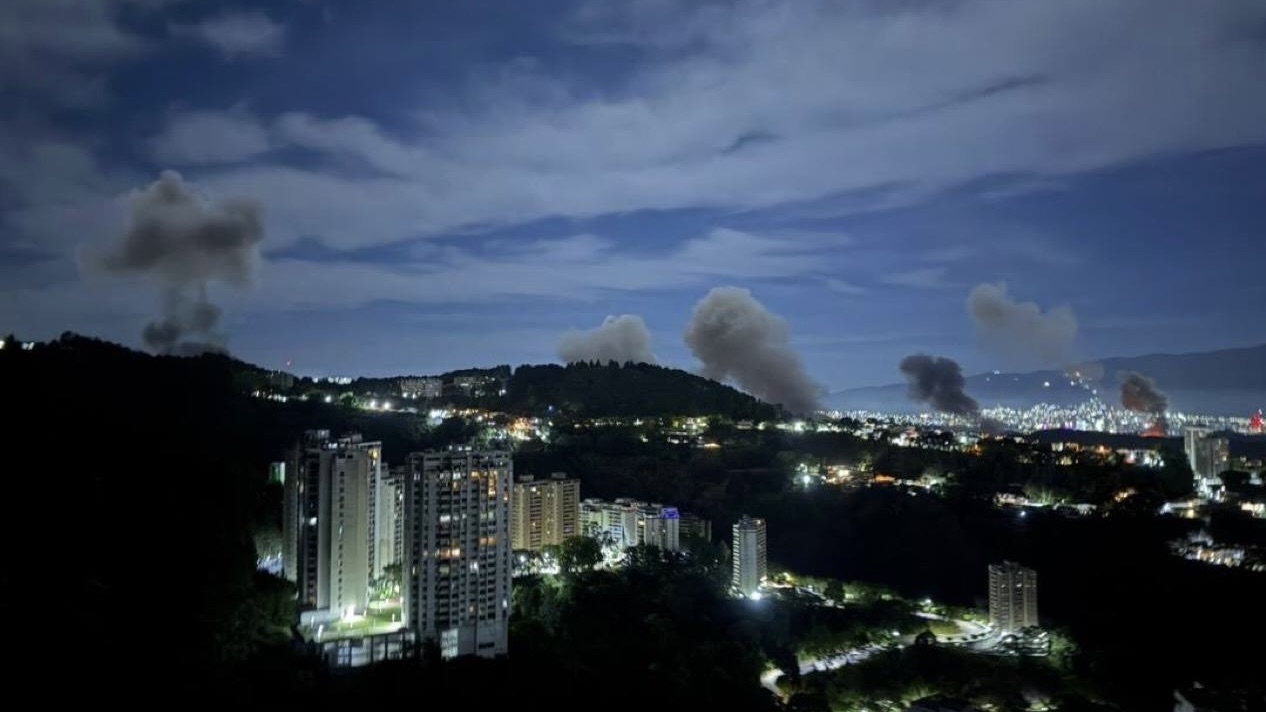
And yet, like most interventions, I do not think this one is likely to age well. I wrote an article in Foreign Policy discussing the historical parallels, written with Carsten-Andreas Schulz. Echoes of US interventions a century ago, we argue, suggest that the idea of “running” Venezuela from offshore will quickly become fraught. Marco Rubio’s appearance on Capitol Hill suggested as much, again making demands and levelling threats.
I also participated in a panel organized by the European International Studies Association, “After Venezuela: Regional and Global Consequences of U.S. Intervention.” Reflecting the unstinting pace of the news cycle, much of the discussion had already shifted to threats against Greenland and the consequences for NATO.
There’s a great deal more to say about this intervention and its consequences. The attack was an evident violation of international law and affront to the UN Charter. There’s been a lot of discussion of this, although I’m not sure to what end. The Trump administration–unlike in the 2003 invasion of Iraq–barely made an effort to cook up international legal justifications. Instead, they appealed to the extra-territorial enforcement of US law. The US has done this in some ways (sanctions, prosecutions) for a long time, but the idea that the enforcement of US law justifies the US of military force is quite different. (In some respects, the 1989 invasion of Panama and arrest of Manuel Noriega shared this notion, but there was also an argument made about democracy, human rights, etc.)
Few tears will be shed for Nicolás Maduro. The justifications offered for his removal (the quasi-fictional ‘Cartel de los Soles’) are dubious, but Maduro was an autocrat who presided over the impoverishment of his people and the destruction of democracy through violent repression and stunning corruption. But the regime that he helped consolidate essentially remains in place. There’s little evidence so far that the intervention will materially improve conditions for people in Venezuela. Indeed, it’s quite clear that this wasn’t the point. If anyone had any doubt, then the Trump administration’s removal of protected status for Venezuelan migrants and attempts to dramatically escalate non-criminal deportations to a country in crisis should make that clear. This creates quite a political challenge for the Venezuelan opposition, like Maria Corina Machado, who have cozied up to Trump during the past year and since the intervention.
What was the point, then? What drove this decision? On the one hand, Trump’s own declarations make it seem obvious: it was about the oil. That explanation has proved popular with those who see the intervention as nothing more than a continuation of resource imperialism, now with the mask off.
I don’t think this is an adequate explanation, however. Maduro was eager to make a deal on oil, if it kept him in power. The problem was that making such a deal with Maduro was unacceptable to a slice of Trump’s coalition, especially Cuban and Venezuelan exiles centered around Marco Rubio. The pressure on Cuba, then, was a central goal. Trump’s idea of cashing in on these oil fields clashes with limited interest from major oil companies in sinking major investments there. For others, like Stephen Miller, forcing Venezuela to accept more deportees was the point. At least at first glance, the intervention gave something to many elements of the Trump coalition. But with the rest of the regime in place, little prospect of aid, and no respite for Venezuelan migrants, what it has given to the people of that country is far from evident.
 Tom Long, PhD