2017 has been quite a busy year, both professionally and personally. In September, I started a new post at the University of Warwick in the department of Politics and International Studies. It’s a great department, regularly ranked among the top five Politics departments in the UK. I am teaching an MA course on Rising Powers and finalist undergrad course on Latin America that combines comparative politics and IR. My new students and colleagues have been great. We also moved to Leamington Spa, which was shortly thereafter named happiest town in the UK. I’m not sure about that, but it is full of coffee and tea shops, so it might be the most caffeinated, which is basically the same thing.
I spent about two months earlier in the year in Colombia on a British Council Researcher Links, collaborating with my friend and colleague Sebastián Bitar of Universidad de los Andes. We held a number of events related to Colombian foreign policy and the effects of the peace process. I also worked on an — ultimately unsuccessful 😦 — ESRC New Investigators grant application. Seb and I are wrapping up a journal article as one of the products of that collaboration.
A number of publications bunched together, making 2017 look like a very productive year. My book was released in paperback in June and received a number of largely positive reviews. The royalties are allowing me to live large, with a moderately priced dinner for two every six months. (Just kidding! All royalties go to WOLA.)Continue reading “2017 Year in Review”
 My newest article is just out as part of a special issue of the journal Contemporary Politics, vol. 24, no. 1. The issue came out of a workshop at the College of Europe, called Between cooperation and competition: major powers in shared neighbourhoods. The workshop and issue were organized and edited by Simon Schunz, Sieglinde Gstöhl & Luk Van Langenhove, who did a great job putting this all together.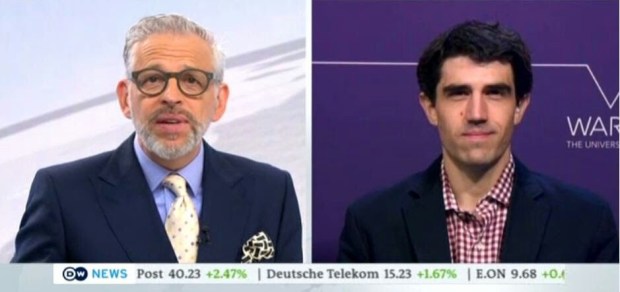
 (belated post) I talked to
 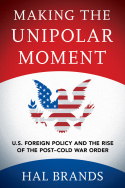 I reviewed Hal Brands’s intriguing Making the Unipolar Moment for Political Science Quarterly. The review has been published as part of the fall issue, and
  My book Latin America Confronts the United States has just been released in paperback from Cambridge University Press. And it’s on sale on Amazon!
  My chapter “Regional public goods in North America,” with Manuel Suárez-Mier, was just released in the book 21st Century Cooperation: Regional Public Goods, Global Governance, and Sustainable Development,
  I have a new, general audience article with Max Paul Friedman on the International Security Studies Forum. They have been running a policy series on different aspects of U.S. foreign and security policy today.
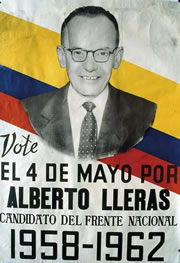 I reviewed Princeton historian Robert Karl’s very good article on the intersection of the Cuban Revolution and Colombian domestic politics. The review was published today on the H-Diplo forum. In the review, I write:
 Tom Long, PhD