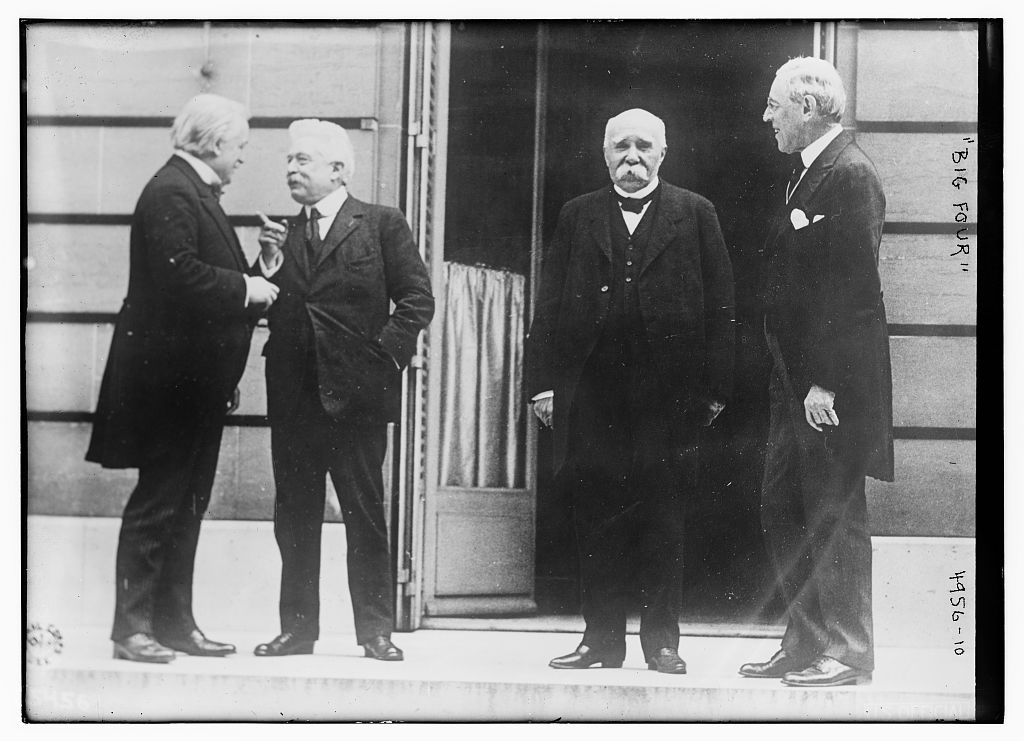
The prerogatives of the UN Security Council’s ‘Permanent Five’ have long drawn the ire of states excluded from this exclusive council. However, the United Nations was not the first international body to embody this sort of ‘sovereign inequality’ in its core institutional design. Instead, this architecture originated with the League of Nations’ division of a powerful, narrow council from a weaker, but universal, assembly. But where did that design originate?
In our new article in International Studies Quarterly, Carsten-Andreas Schulz and I re-examine the design of the world’s first universal, general intergovernmental organization.
In arriving to the ultimate design between 1915 and 1919, the League’s architects consistently invoked a particular negative antecedent to justify their positions: Latin America’s stubborn insistence on sovereign equality at the 1907 Second Hague Conference. Although this meeting is often highlighted as a heroic moment in Latin American diplomatic history, European and U.S. counterparts largely did not see it that way. Eyre Crowe, the British delegation’s first secretary, seethed that “The South Americans have made themselves supremely ridiculous by speechifying in and out of season in the name of the equality of all nations.”
In the midst of World War I, Crowe and others looked towards the postwar order. Their institutional solution permitted universal participation and a cursory nod to juridical equality while embedding an institutionalized hierarchy that preserved great power privilege.
The article, ‘Bound by History: How Antecedents Shaped the League of Nations Institutional Design,’ emerged from research from our AHRC grant on Latin America and the making of the modern international order.

 Tom Long, PhD