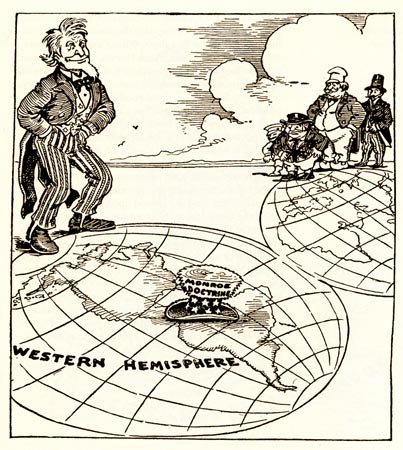
As the Monroe Doctrine marks 200 years since it was first enunciated, the time-worn US policy is back in the news. In a new article in Foreign Policy magazine, PAIS’s Carsten-Andreas Schulz and I examine the many meanings of the Monroe Doctrine and argue that it provides a poor guide for US-Latin American relations today. The article draws on their joint AHRC-funded project, “Latin America and the peripheral origins of nineteenth century international order.”
“The Monroe Doctrine is experiencing a resurgence. As it hits its 200th anniversary this month, this time-hallowed foreign-policy principle—which declares that Washington will oppose political and military incursions into the Western Hemisphere by powers outside of it—is once again at the forefront of political debates in the United States.
Republican presidential candidates such as Vivek Ramaswamy and Ron DeSantis are calling for the doctrine’s reinvigoration to take aim at China’s growing presence in Latin America and are offering it as a justification for a potential U.S. military attack on criminal organizations in Mexico. They are following the lead of former U.S. President Donald Trump, who hailed Monroe on the floor of the United Nations General Assembly, as well as advisors such as John Bolton and former Secretary of State Rex Tillerson.”

 Tom Long, PhD